
Comic Book Ages Explained: Golden to Modern
Golden, Silver, Bronze, Copper, Modern — the eras every collector should know.
 By Web Admin
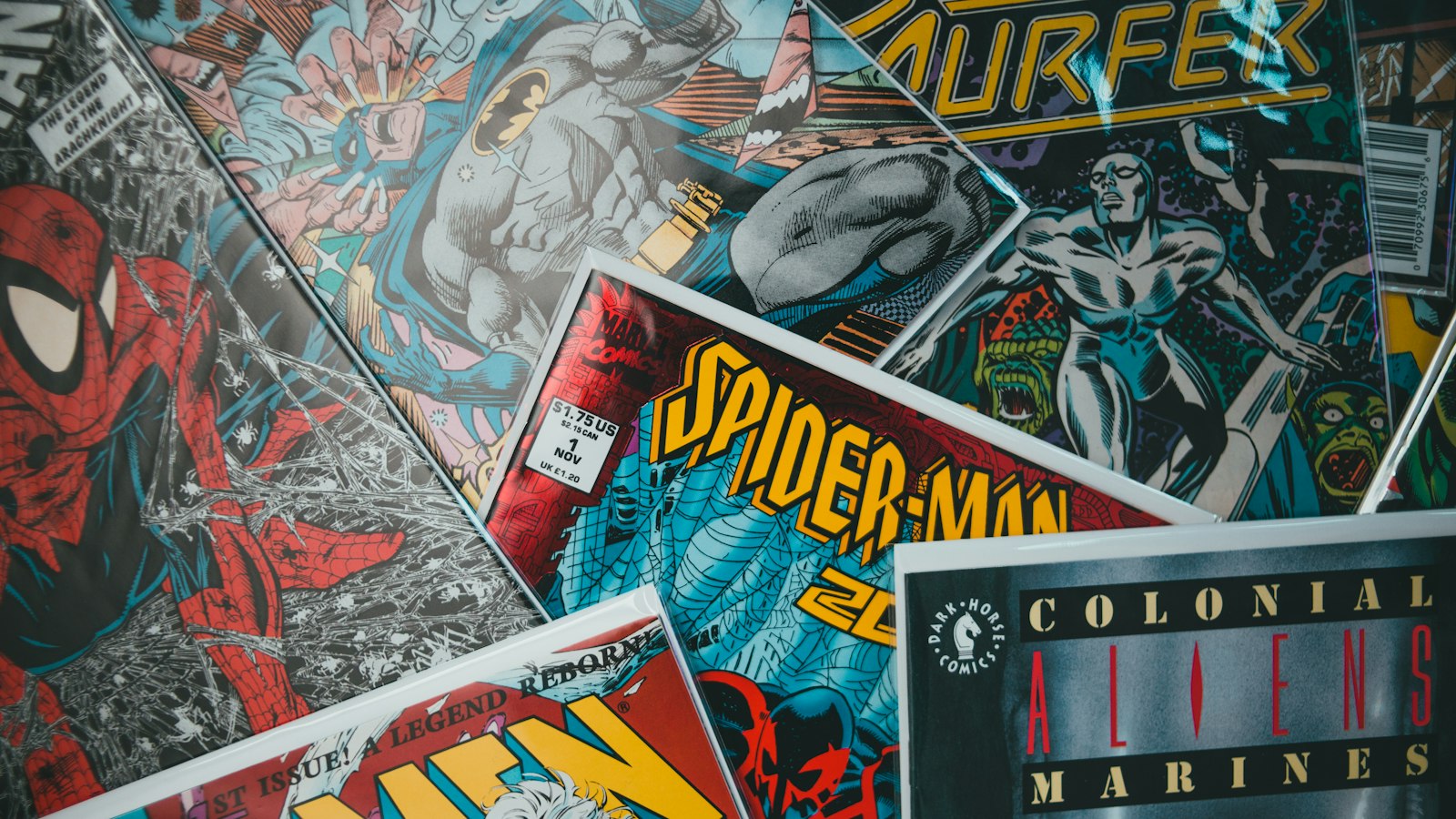
Spend five minutes in a comic shop or an online listing and you’ll bump into the language of “ages” — a Golden Age key, a Bronze Age gem, a Copper Age sleeper. These era labels are more than jargon. They tell you roughly when a book was made, what it’s likely to be worth, and what to expect on the page. This guide explains the comic book ages from Golden to Modern, with approximate date ranges, the books and events that define each period, and why the whole framework matters when you’re buying or selling.
One honest caveat up front: the boundaries between ages are debated, and no committee ever ratified them. Collectors and historians disagree about exact start and end years, especially for the more recent eras. The dates below are the commonly cited ranges, but treat them as useful approximations rather than hard lines.
Why the “ages” framework exists
The age system grew out of collectors trying to make sense of the medium’s history — borrowing, loosely, the “Golden Age / Silver Age” language from science-fiction fandom. Each age marks a shift in the industry: a new wave of characters, a change in tone, a business upheaval, or a technological change in how comics were printed and sold. Knowing the ages helps you date an unmarked book, gauge scarcity, and understand why two comics of similar age can differ wildly in value.
Age also correlates strongly with price. Older generally means scarcer, because more copies have been lost to time — which is a big reason the most valuable comic books skew so heavily toward the earliest eras.
The ages at a glance
| Age | Approx. years | Hallmarks | Defining books |
|---|---|---|---|
| Golden Age | 1938–1956 | Birth of the superhero; wartime patriotism | Action Comics #1, Detective Comics #27 |
| Silver Age | 1956–1970 | Superhero revival; sci-fi optimism; Marvel rises | Showcase #4, Amazing Fantasy #15, Fantastic Four #1 |
| Bronze Age | 1970–1985 | Darker, socially aware stories; horror returns | Green Lantern/Green Arrow #76, Giant-Size X-Men #1 |
| Copper Age | 1985–1991 | Maturity, “grim and gritty,” early speculation | Watchmen, The Dark Knight Returns |
| Modern Age | 1992–present | Image founded; speculator boom and bust; decompression | Spawn #1, The Walking Dead #1, Saga #1 |
The Golden Age (1938–1956)
The Golden Age begins with Action Comics #1 and the debut of Superman, the book that created the superhero and, with it, the industry. Batman, Wonder Woman, Captain America, and the original Human Torch all followed within a few years. Wartime comics leaned patriotic — heroes literally punched fascists on the cover — and print runs were enormous, but survival rates are tiny thanks to disposability and wartime paper drives.
By the early 1950s the superhero boom had cooled, and crime and horror comics surged. That, in turn, triggered a public backlash and the industry’s self-censoring Comics Code Authority in 1954, which effectively ended the era. Golden Age keys sit at the very top of the value pyramid; even mid-grade copies of major firsts command serious money.
The Silver Age (1956–1970)
Most historians date the Silver Age to 1956 and Showcase #4, which reintroduced the Flash with a science-fiction spin and kicked off a superhero revival. DC rebuilt its roster, but the era belongs to Marvel: between 1961 and 1963, Stan Lee, Jack Kirby, and Steve Ditko created the Fantastic Four, Spider-Man, the X-Men, the Hulk, Iron Man, and the Avengers, defining the flawed, human superhero template that still dominates.
Silver Age keys — Amazing Fantasy #15, Fantastic Four #1, X-Men #1 — are among the most sought-after books in collecting. If you want to actually read the run rather than vault it, our Marvel reading order for beginners and X-Men reading order are the place to start.
The Bronze Age (1970–1985)
The Bronze Age keeps the Silver Age’s characters but darkens the mood. Stories tackled real-world issues — addiction, racism, poverty — most famously in the Green Lantern/Green Arrow run. A relaxation of the Comics Code allowed horror to return, and creators like Steven Englehart, Chris Claremont, and Marv Wolfman pushed longer, more serialized storytelling.
Two Bronze Age developments loom large for collectors: the 1975 relaunch of the X-Men in Giant-Size X-Men #1, and the first full appearance of Wolverine in Incredible Hulk #181 (1974) — now one of the most valuable non-Golden/Silver keys, as our most valuable comics guide details.
The Copper Age (1985–1991)
The Copper Age is the most debated of all — some collectors fold it into the Bronze or Modern eras entirely. What sets it apart is a wave of ambitious, adult-oriented work alongside the first real speculator frenzy. In 1986–1987, Watchmen, The Dark Knight Returns, and Maus proved comics could be serious literature, reshaping the whole medium’s ambitions.
At the same time, publishers began flooding the market with variant covers, foil editions, and “collectible” gimmicks aimed at speculators — planting the seeds of the crash that would define the next era. For the artistic high points, see our reviews of Watchmen and The Dark Knight Returns.
The Modern Age (1992–present)
Most collectors mark the Modern Age from 1992, when a group of star artists left Marvel to found Image Comics, giving creators ownership of their work. The early 1990s speculator bubble — driven by polybagged, multi-cover “instant collectibles” — inflated print runs to the millions and then burst spectacularly around 1993–1996, bankrupting distributors and shuttering thousands of shops.
The industry that emerged is the one we know today: creator-owned hits like The Walking Dead, Saga, and Invincible; “decompressed,” trade-paperback-friendly storytelling; and a market where digital and collected editions matter as much as monthly issues. Because print runs ballooned, most Modern books stay near cover price — genuine Modern keys are the exception, which is why we track them separately in our modern key issue watch.
Why the ages matter to collectors
Understanding the ages pays off in practical ways.
- Dating a book. Cover price, art style, ads, and the presence or absence of the Comics Code stamp all help place an undated comic in its era.
- Judging scarcity. Older ages generally mean smaller surviving populations, which underpins value.
- Setting expectations. An age tells you the likely tone and format — a Golden Age book reads nothing like a Modern trade collection.
- Spotting overhype. Knowing that Modern print runs were huge helps you resist paying “key issue” prices for a common 1990s book.
Pros
- A quick mental map for dating and valuing any comic
- Explains why the oldest books dominate the value charts
- Helps you read tone and format before you buy
Cons
- Boundaries are informal and genuinely disputed
- The framework is US-centric and doesn’t map neatly onto manga or European comics
- Age alone never sets value — condition and character do too
Where does manga fit?
The age framework is a distinctly American, superhero-centric model, and it doesn’t translate cleanly to manga, which has its own separate history, formats, and collector market. A vintage tankobon or a rare first-print box set follows different rules entirely. If your shelf leans east, browse our manga hub and the guide to the best manga box sets instead.
Frequently asked questions
When did the Golden Age of comics start?
It’s conventionally dated to 1938, with the publication of Action Comics #1 and the debut of Superman — the book widely credited with inventing the superhero and launching the industry.
Are the age boundaries official?
No. The ages are an informal framework invented by collectors and historians, and the exact start and end years — especially for the Copper and Modern ages — are genuinely debated. Treat the ranges as approximate.
Which age has the most valuable comics?
The Golden Age, by a wide margin, because its books are the oldest and scarcest first appearances. The Silver Age holds the top spots for later characters like Spider-Man. See our most valuable comic books guide for figures.
Why are Modern Age comics usually cheap?
Print runs from the 1990s onward are far larger — sometimes in the millions — so scarcity is rare. Most Modern books trade at or near cover price, and only true first appearances of characters who later broke out tend to appreciate.
Next, put these eras to work with our grading guide, or see which contemporary books could become tomorrow’s keys in the modern key issue watch.


