Comic Book Remarques and Sketch Covers: A Collector Guide
Remarque vs sketch cover, commissioning at cons, costs, and value impact.
 By Web Admin
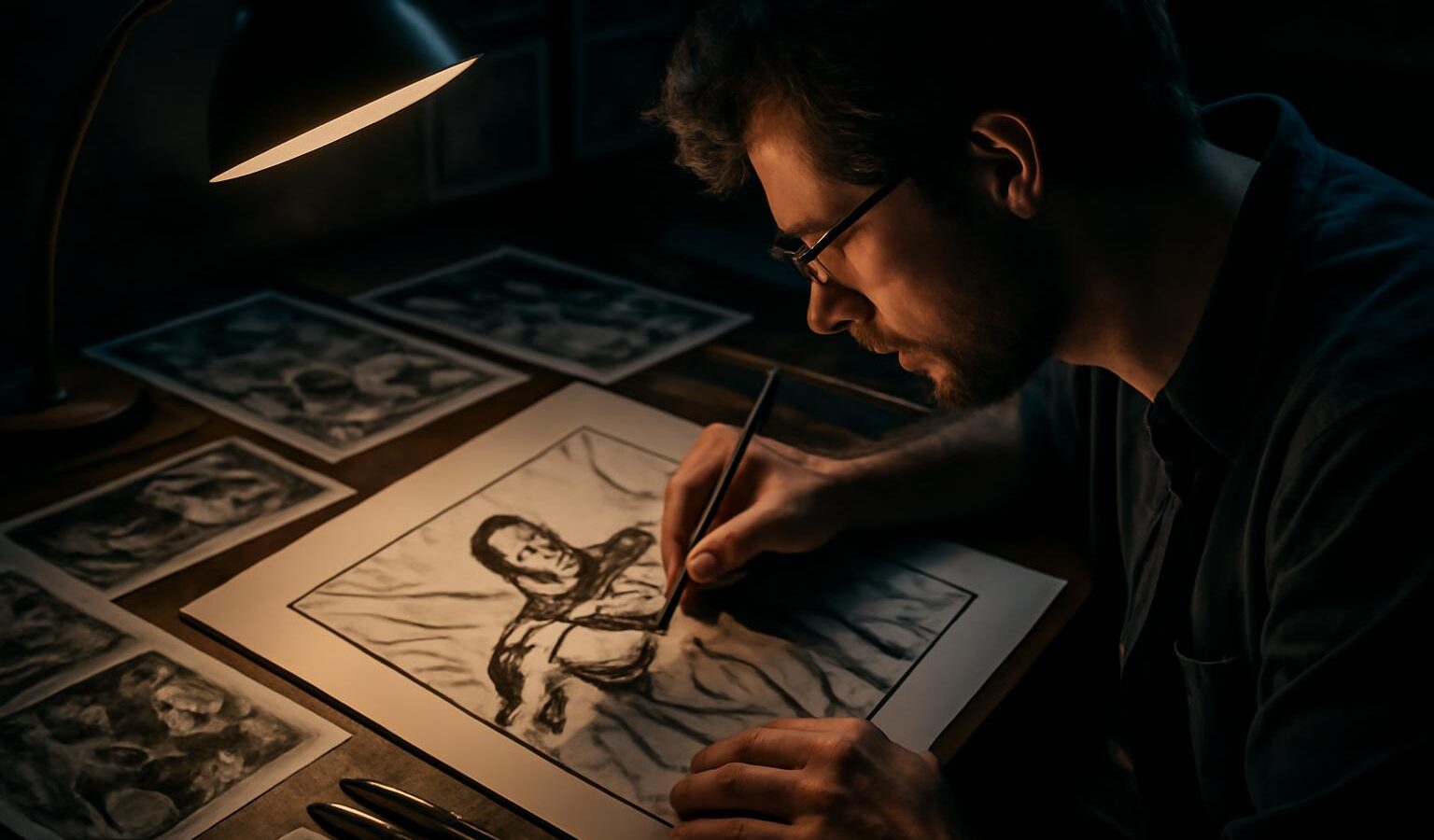
Somewhere between collecting comics and collecting original art sits a hybrid the hobby loves: the comic with hand-drawn art on the cover itself. A quick head sketch in a margin, a full inked drawing on a blank variant, a splash of watercolor around the logo — these are remarques and sketch covers, and they turn a mass-produced book into a genuine one-of-a-kind piece. For collectors who want original art without paying original-art prices, they are one of the most accessible thrills in the hobby.
This guide explains the difference between a remarque and a sketch cover, how to commission one at a convention, what it typically costs, how it affects a book’s value, and how CGC handles hand-drawn art when you slab it. As always, prices swing with the artist and the market, so treat the figures here as approximate ranges rather than fixed rates.
Remarque vs sketch cover: the key distinction
The two terms overlap in everyday talk, but they mean slightly different things:
- Remarque — original art the artist draws directly onto a regular printed comic, usually a small drawing added in an open space near a signature. The book still shows its printed cover; the remarque is an extra flourish, often accompanying an autograph.
- Sketch cover (blank variant) — a comic published with a completely blank white cover, made specifically so an artist can draw a full original piece across the whole front. Here the drawing is the cover.
Put simply: a remarque is a bonus drawing on a normal cover, while a sketch cover is a blank canvas built to be drawn on. Both are original art on a book, but a full sketch-cover commission is typically a bigger, more valuable piece than a small margin remarque.
What a blank sketch cover actually is
Publishers regularly release “blank” or “sketch” variant editions of new comics — identical to the standard issue inside, but with a plain white cover bearing only the logo, or sometimes nothing at all. These usually cost a few dollars more than a normal cover at retail. Collectors buy them for one reason: to have an artist transform that blank space into a custom drawing of their favorite character. A finished sketch cover is unrepeatable, which is exactly the appeal.
If the world of alternate covers is new to you, our variant covers explained guide covers where blanks fit among ratio variants, retailer exclusives, and the rest of the variant ecosystem.
Commissioning art at a convention
Conventions are the natural home of remarques and sketch covers, because that is where the artists are. The typical process:
- Bring your book. Show up with a blank sketch cover (for a full piece) or a regular issue you want remarqued and signed.
- Check the artist’s list. Many artists post a sketch menu — head sketch, bust, full figure, full color — with set prices, and a signup sheet that can fill fast.
- Get in line early. Popular artists take a limited number of commissions per day; sketch lists often close within the first hour.
- Discuss the piece. Agree on the character, the size, and whether it is line art or color before any pen touches paper.
- Come back later. Detailed pieces take time; you often drop the book and return at an assigned pickup slot.
Convention etiquette matters here — artists are working professionals, sketch time is limited, and a little courtesy goes a long way. We put together the do’s and don’ts in comic signing etiquette, which is worth reading before you join a line.
What remarques and sketch covers cost
Price depends overwhelmingly on the artist’s profile and the complexity of the piece. A working convention artist might do a quick head sketch for well under a hundred dollars; a superstar creator’s full-color sketch cover can run into four figures and require an advance slot. Rough, illustrative ranges:
| Type of art | Typical complexity | Approx. cost (US$) |
|---|---|---|
| Small remarque (head sketch) | Quick line drawing by signature | ~US$20–100 |
| Bust or half-figure sketch cover | Larger line art on a blank | ~US$75–300 |
| Full-figure line sketch cover | Detailed full drawing | ~US$150–600 |
| Full-color sketch cover | Inked and colored, more time | ~US$300–1,500+ |
| A-list creator commission | Top-tier name, advance booking | US$1,000–several thousand |
Those numbers move with an artist’s popularity and demand at a given show. The same artist may charge more at a major con than at a local one, and a rising star can double their rates in a year. Budget generously and confirm the price before committing.
How art affects a book’s value
Adding original art fundamentally changes what you own — and how it should be valued. A remarqued or sketch-covered book is no longer priced like a printed comic; it is priced like a piece of original art on a comic substrate. That has a few consequences:
- The artist drives the value. A sketch cover is worth what that artist’s original art is worth. A beloved name adds far more than the paper ever could.
- Quality and character matter. A detailed, on-model drawing of a popular character is worth more than a rushed generic sketch.
- It is unique. There is exactly one of your piece, which removes the print-run math entirely and replaces it with the fickle economics of original art.
- Liquidity is different. Selling original art can take longer than selling a graded key, because the buyer has to want that specific piece.
One important nuance: a hand-drawn addition only adds value when a collector wants that art. On a valuable printed key, drawing on the cover can actually reduce value for buyers who wanted a pristine printed copy — so people commission remarques on inexpensive books or dedicated blanks, never on a rare key. To understand which artists carry the strongest following, see our roundup of the best comic book artists.
Getting a remarque signed and witnessed
Because a remarque usually comes with the artist right there, it is the perfect moment to have the signature witnessed for authentication. A witnessed signature is verified by an authorized witness as it happens, which lets it be certified rather than treated as an unverified pen mark. For the full mechanics of witnessed autographs, read our signed comics guide — the same logic that protects a signature protects a remarque.
AmazonCheck price on AmazonUntil you get the book into a proper holder or slab, protect that fresh art from smudging. A rigid toploader keeps a signed, remarqued book flat and safe on the trip home from the con.
How CGC handles hand-drawn art
Grading companies treat original art on a cover differently from an ordinary defect, and CGC has dedicated ways to certify it:
- Signature Series (yellow label) — if a CGC-authorized witness watches the artist sign and add the remarque, the book can be encapsulated with the yellow Signature Series label certifying the signature and, where applicable, noting the sketch or remarque.
- Sketch and remarque notation — CGC can note the presence of an original sketch or remarque on the label so it is documented and certified rather than mistaken for damage.
- Grading the book, not the art — the numerical grade reflects the printed book’s condition; the drawing itself is a separate value factor that the market, not the grade, prices.
The key practical point: to get the best certification, arrange the witnessing before the artist draws, not after. An unwitnessed sketch can still be slabbed and noted, but a witnessed Signature Series piece carries stronger authentication. Our CGC Signature Series guide walks through exactly how the yellow-label process works and how to book a witness at a show.
Should you commission a remarque or sketch cover?
Pros
- You get genuine one-of-a-kind original art, often affordably
- Meeting the artist and watching the piece come to life is a real experience
- A witnessed signature and remarque can be certified together
- Great pieces from popular artists can appreciate as original art
Cons
- Value is tied to one artist and can be hard to resell quickly
- Never commission on a rare key — it can lower that book’s value
- Superstar commissions are costly and require advance booking
- An unprotected fresh sketch can smudge before it is slabbed
For most collectors the answer is a happy yes, as long as you treat it as buying art you love rather than an investment. Commission on a cheap book or a dedicated blank, get it witnessed if you can, protect it immediately, and slab it if the piece warrants it.
Remarques, sketch covers, and the wider hobby
Hand-drawn covers sit alongside pedigrees and grading as one of the ways collectors chase the unrepeatable. Where a pedigree celebrates how a printed book survived, a remarque celebrates what an artist added to it — two very different routes to a one-of-a-kind book. If the provenance side interests you, see our companion piece on comic book pedigree collections.
Frequently asked questions
What is the difference between a remarque and a sketch cover?
A remarque is a small original drawing an artist adds to a regular printed cover, usually next to a signature. A sketch cover is a comic published with a blank white cover specifically so an artist can draw a full original piece across the whole front. A sketch cover is typically a bigger, more valuable commission.
How much does a sketch cover cost?
It ranges widely with the artist and complexity. A quick head-sketch remarque can be around US$20 to US$100, a detailed line sketch cover often runs US$150 to US$600, and a full-color piece or an A-list creator commission can reach four figures. Always confirm the price before committing.
Does a remarque increase a comic’s value?
It depends on the artist and the book. On a blank variant or an inexpensive issue, a strong piece by a popular artist adds real value as original art. On a rare printed key, though, drawing on the cover can lower value for buyers who wanted a pristine copy — so remarques are done on cheap books or dedicated blanks.
How does CGC certify a sketch cover?
If a CGC-authorized witness watches the artist sign and draw, the book can be slabbed with a yellow Signature Series label certifying the signature and noting the sketch or remarque. The numerical grade reflects the printed book’s condition, while the art is priced separately by the market. Arrange witnessing before the artist draws for the strongest authentication.
Keep going: learn the witnessed-autograph process in our CGC Signature Series guide, mind the line with comic signing etiquette, and see who is worth commissioning in our best comic book artists roundup.