Best Political Comics & Graphic Novels
Sharp graphic storytelling about power, protest and justice.
 By Web Admin
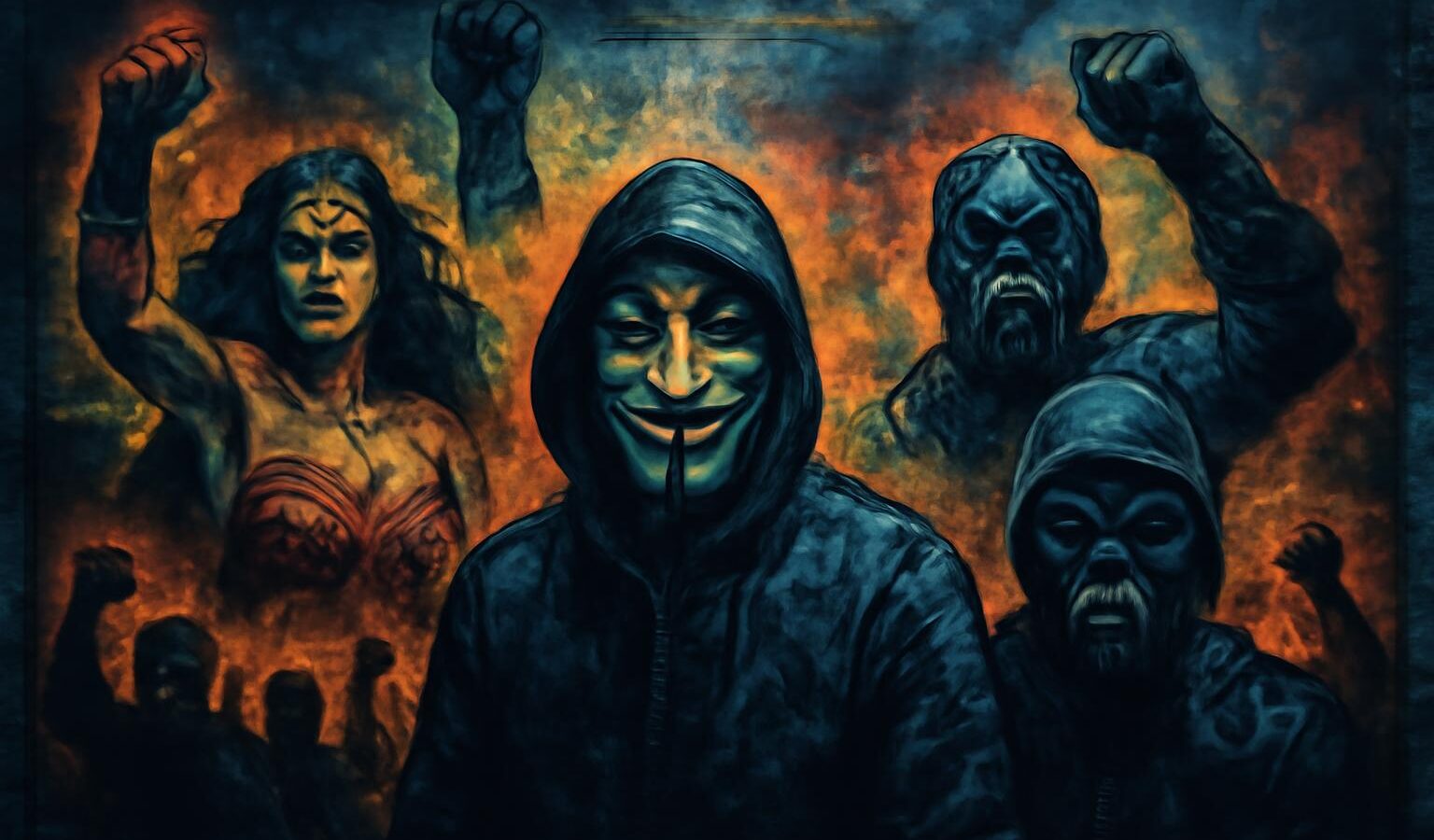
Comics have always been political. Newspaper cartoonists were lampooning kings and presidents long before superheroes existed, and the modern graphic novel has room to make a full argument: about civil rights, war, occupation, state power or the people who resist it. This guide to the best political comics covers memoir, reportage and dystopian fiction. Our aim is to describe what each book argues and how well it argues it, not to tell you what to think. Most of these have a clear point of view; the best way to read them is widely, as one voice in a larger conversation.
As an Amazon Associate we earn from qualifying purchases.
How we chose: we compared current Amazon listings with our own reading, looking for books that are landmarks of the form, that make their case through character and reporting rather than slogans, and that are in print in a solid edition. We included works from different vantage points and eras. Prices and availability change, so the buttons show Amazon’s current price.
| Pick | Best for | Why | Price | Buy |
|---|---|---|---|---|
| March (Omnibus Edition) | Best overall |
| $20.67as of Nov 24, 2026 4:10 pm UTC | View on Amazon |
| V for Vendetta | Best dystopian fiction |
| $15.29as of Nov 24, 2026 10:29 am UTC | View on Amazon |
| Palestine | Best comics journalism |
| $27.70as of Nov 25, 2026 12:32 am UTC | View on Amazon |
| Kent State | Best American history |
| $14.19as of Nov 24, 2026 4:10 pm UTC | View on Amazon |
| They Called Us Enemy | Best for students |
| $10.48as of Nov 25, 2026 12:32 am UTC | View on Amazon |
| The Arab of the Future | Best political memoir |
| $30.74as of Nov 24, 2026 4:10 pm UTC | View on Amazon |
| The Dark Knight Returns | Best superhero politics |
| $16.99as of Nov 25, 2026 4:01 am UTC | View on Amazon |
Prices and availability change; check Amazon for today’s price. As an Amazon Associate we earn from qualifying purchases.
1. March (Omnibus Edition) — Best overall

John Lewis's firsthand account of the civil rights movement, all three books in one volume.
Check price on Amazon$20.67as of Nov 24, 2026 4:10 pm UTCWhy we like it
- History told by someone who was there
- Clear on strategy, not just heroism
- Nate Powell's art makes violence felt, not sensational
- Whole trilogy in one paperback
| Specification | Details |
|---|---|
| Writer / Artist | John Lewis and Andrew Aydin / Nate Powell |
| Publisher | Top Shelf Productions |
| Collects | March: Book One, Book Two and Book Three |
| Pages | 588 |
| Format | Paperback omnibus |
| Reader age | Not stated in listing; racist violence and slurs, teens and up |
March (Omnibus Edition) — Lewis, Aydin and Powell, Top Shelf, three books, 588 pages
John Lewis grew up on an Alabama farm, joined the Nashville lunch-counter sit-ins as a student, rode with the Freedom Riders, chaired the Student Nonviolent Coordinating Committee and was beaten on the Edmund Pettus Bridge in Selma in 1965. March, written with his aide Andrew Aydin and drawn by Nate Powell, tells that story in his own voice, framed by the morning of Barack Obama's 2009 inauguration.
What makes it the best political comic for most readers is how much it explains. It shows the training sessions where activists practiced absorbing abuse without striking back, the arguments inside the movement over tactics, and the tension between activists and the politicians they were lobbying. Its argument is for disciplined nonviolent protest as a way to change law, and it makes that case with specifics. Book Three won the National Book Award for Young People's Literature, a first for a graphic novel.
The omnibus puts all three books in one volume, the simplest way to own the whole thing. Our March review goes deeper.
Pros
- Firsthand, detailed history
- Complete trilogy in one book
- Widely taught and discussed
Cons
- Graphic depictions of racist violence
- Inauguration framing can feel dated
- Thick omnibus is less portable
Get March (Omnibus Edition) on Amazon
2. V for Vendetta — Best dystopian fiction

A masked anarchist wages a one-man war on a fascist near-future Britain.
Check price on Amazon$15.29as of Nov 24, 2026 10:29 am UTCWhy we like it
- A real argument, not just an action story
- Morally ambiguous lead keeps you questioning
- David Lloyd's shadowy art fits the mood
- Complete in one volume
| Specification | Details |
|---|---|
| Writer / Artist | Alan Moore / David Lloyd |
| Publisher | DC Comics |
| Collects | The complete series |
| Pages | 296 |
| Format | Paperback |
| Reader age | Not stated in listing; violence, torture and terrorism, adults |
V for Vendetta — Moore and Lloyd, DC Comics, complete story, 296 pages
In a Britain taken over by a fascist party after a nuclear war, a masked figure called V blows up landmarks, assassinates officials and takes in a young woman named Evey, whom he subjects to his own harsh education. Alan Moore and David Lloyd began the story in the British anthology Warrior in the early 1980s, partly in reaction to the politics of the time, and finished it later for DC.
The book sets fascism against anarchism and refuses to make the choice easy. V is charismatic but also a terrorist who manipulates and tortures; the regime's officials are drawn as people, not cartoons. Readers still argue over whether the book endorses V's methods. That ambiguity is the point, and it's why it remains one of the most discussed political comics ever made. The 2005 film and the Guy Fawkes mask's afterlife as a protest symbol simplified it a great deal.
Read it alongside Moore's Watchmen (see our Watchmen review) for his other great book about power. Our V for Vendetta review has more.
Pros
- Thought-provoking and ambiguous
- Atmospheric art
- Standalone story
Cons
- Dense text and slow start
- Muted colors can feel murky
- Disturbing torture sequence
3. Palestine — Best comics journalism

Joe Sacco's reporting from the West Bank and Gaza during the First Intifada.
Check price on Amazon$27.70as of Nov 25, 2026 12:32 am UTCWhy we like it
- The book that defined comics journalism
- Sacco puts his own doubts on the page
- Dense, observational drawing
- New hardcover edition with added essays
| Specification | Details |
|---|---|
| Creator | Joe Sacco (introduction by Edward W. Said, afterword by Amira Hass) |
| Publisher | Fantagraphics |
| Collects | The complete Palestine series |
| Pages | 300 |
| Format | Hardcover |
| Reader age | Not stated in listing; violence and detention, adults |
Palestine — Sacco, Fantagraphics, complete series, 300-page hardcover
In the winter of 1991 to 1992, Joe Sacco spent about two months in the West Bank and Gaza during the First Intifada, interviewing Palestinians about arrests, detention, curfews and daily life under Israeli military occupation. Palestine is the result, first published as a comic series and later collected. It is widely credited with creating modern comics journalism.
Sacco draws himself into the story as a nervous, sometimes clumsy outsider, and that self-portrait matters: he is open that he went to record Palestinian experiences, which he felt American media rarely showed. The book's focus is therefore on one side's account, and critics have argued it gives little room to Israeli perspectives or to the violence of the uprising itself. Supporters see it as a necessary corrective. Either way, it is a landmark of the form, and readers should know its vantage point going in.
This Fantagraphics hardcover adds an introduction by Edward Said and an afterword by Israeli journalist Amira Hass. Sacco's later Footnotes in Gaza applies the same method to events of 1956.
Pros
- Landmark of comics reportage
- Self-aware narrator
- Detailed, immersive art
Cons
- Intentionally one-sided focus
- Dense pages, slow going
- Grim subject throughout
4. Kent State: Four Dead in Ohio — Best American history

A minute-by-minute account of the four days leading to the May 4, 1970 shootings.
Check price on Amazon$14.19as of Nov 24, 2026 4:10 pm UTCWhy we like it
- Meticulously researched, with source notes
- Shows students, guardsmen and officials as people
- Builds dread with a ticking-clock structure
- Clear on what went wrong and who decided
| Specification | Details |
|---|---|
| Creator | Derf Backderf |
| Publisher | Abrams ComicArts |
| Collects | Complete graphic nonfiction |
| Pages | 288 |
| Format | Hardcover |
| Reader age | Not stated in listing; gun violence and death, teens and up |
Kent State — Backderf, Abrams ComicArts, 288-page hardcover
On May 4, 1970, Ohio National Guard troops fired on students at Kent State University during protests against the expansion of the Vietnam War into Cambodia. Four students were killed and nine wounded. Derf Backderf, who grew up nearby, reconstructs the four days leading up to it from interviews, archives and the FBI investigation.
He follows the four students who died closely, but also the young, exhausted guardsmen, many the same age as the protesters, and the state and university officials whose decisions put them face to face. The book is sharply critical of Ohio's political leadership at the time and of the decision to send armed troops onto a campus, and it lays out its evidence in detail in the endnotes so readers can weigh it.
It is a gripping, sad book that shows how political rhetoric turns into a physical confrontation. Pair it with March for two views of American protest a few years apart.
Pros
- Thorough research and notes
- Humanizes everyone involved
- Tense, readable structure
Cons
- Heavy, tragic ending
- Rubbery cartoon style is an acquired taste
- Strong views on officials' culpability
5. They Called Us Enemy — Best for students

George Takei's childhood in U.S. incarceration camps for Japanese Americans during World War II.
Check price on Amazon$10.48as of Nov 25, 2026 12:32 am UTCWhy we like it
- Told through a child's eyes
- Explains the policy and the politics behind it
- Accessible for middle and high school readers
- Harmony Becker's clean, expressive art
| Specification | Details |
|---|---|
| Writer / Artist | George Takei, Justin Eisinger and Steven Scott / Harmony Becker |
| Publisher | IDW (Top Shelf) |
| Collects | Complete graphic memoir |
| Pages | 208 |
| Format | Paperback |
| Reader age | Not stated in listing; suitable for middle grade and up |
They Called Us Enemy — Takei, Eisinger, Scott and Becker, IDW, 208 pages
In 1942, after Pearl Harbor, President Franklin Roosevelt's Executive Order 9066 led to the forced removal of about 120,000 people of Japanese ancestry from the West Coast, most of them American citizens. George Takei, later Sulu on Star Trek, was four years old when his family was taken from Los Angeles to camps in Arkansas and California.
The memoir sets his childhood memories, which were often of adventure, against what his parents understood and endured, including the "loyalty questionnaire" that split families. It also follows Takei's adult conversations with his father about whether American democracy had failed them or could still be trusted. The book's argument is about due process and how fear shapes policy, and it is careful to show the debates of the time.
It is the most classroom-ready pick here. It also tops our best nonfiction comics guide.
Pros
- Suitable for younger readers
- Clear historical context
- Moving father-son story
Cons
- Gentler than adult-focused histories
- Present-day framing is a little heavy
- Short for its subject
Get They Called Us Enemy on Amazon
6. The Arab of the Future — Best political memoir

Riad Sattouf's childhood in Gaddafi's Libya and Hafez al-Assad's Syria, following his idealistic father.
Check price on Amazon$30.74as of Nov 24, 2026 4:10 pm UTCWhy we like it
- Shows ideology through a child's daily life
- Darkly funny and unsparing
- Clean, color-coded art by country
- Opening of a multi-volume saga
| Specification | Details |
|---|---|
| Creator | Riad Sattouf |
| Publisher | Metropolitan Books |
| Collects | Volume 1: A Childhood in the Middle East, 1978–1984 |
| Pages | 160 |
| Format | Paperback |
| Reader age | Not stated in listing; animal cruelty and violence, older teens and up |
The Arab of the Future, Vol. 1 — Sattouf, Metropolitan Books, 1978–1984, 160 pages
Riad Sattouf's father was a Syrian academic devoted to pan-Arab nationalism; his mother was French. The first volume of The Arab of the Future follows young Riad as his father moves the family from France to Muammar Gaddafi's Libya and then to his home village in Hafez al-Assad's Syria, convinced that a new Arab future is being built there.
Sattouf tells it from a small boy's height, without commentary: the empty shops, the propaganda, the casual cruelty, his father's growing excuses. The book's target is authoritarian rule and the self-deception of the true believer, and it has sharp moments about France too. It has been praised as a clear-eyed portrait of 1980s dictatorships, and criticized by some readers for an unflattering depiction of Syrian village life. Both responses are worth knowing.
This is volume 1 of a multi-volume series, and later volumes continue the story into Riad's teens. Start here; it works well on its own.
Pros
- Vivid, specific detail
- Funny and disturbing at once
- Easy, fast read
Cons
- First of several volumes
- Some readers find it harsh on Syrians
- Listing shows limited stock
Get The Arab of the Future on Amazon
7. Batman: The Dark Knight Returns — Best superhero politics
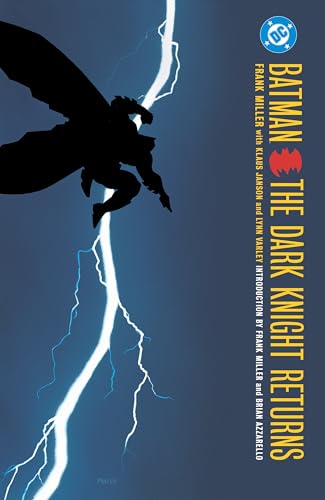
An aging Batman returns to a crime-ridden Gotham in Frank Miller's Cold War satire.
Check price on Amazon$16.99as of Nov 25, 2026 4:01 am UTCWhy we like it
- Superhero story as political argument
- Talking-head TV panels satirize the media
- Unusual vantage point among political comics
- Hugely influential on everything that followed
| Specification | Details |
|---|---|
| Writer / Artist | Frank Miller (inks by Klaus Janson, colors by Lynn Varley) |
| Publisher | DC Comics |
| Collects | The Dark Knight Returns #1–4 |
| Pages | 224 |
| Format | Paperback (new edition) |
| Reader age | Not stated in listing; violence, older teens and up |
Batman: The Dark Knight Returns — Miller, Janson and Varley, DC Comics, 224 pages
Ten years after retiring, a 55-year-old Bruce Wayne puts the cowl back on to fight a gang that has overrun Gotham, and finds himself at odds with the police, the press, psychiatrists and finally Superman, now a government agent for a Reagan-like president. Frank Miller's 1986 book is told partly through TV news panels and pundits arguing over whether Batman is a hero or a menace.
It is here because its politics differ from most books on this list. Miller's story is skeptical of liberal institutions, sympathetic to a vigilante restoring order and also mocking of the government and Cold War brinkmanship. Some readers see it as a defense of strongman justice; others read it as satire of exactly that. It is worth reading for how it argues, and for how much it shaped later superhero comics.
Our Dark Knight Returns review goes deeper into its art and legacy.
Pros
- Distinct political vantage point
- Inventive media-satire structure
- Landmark of the genre
Cons
- Crowded, dense panels
- Divisive politics by design
- Dated slang in places
Get The Dark Knight Returns on Amazon
More political comics worth reading
- Persepolis (Marjane Satrapi) — a childhood through Iran's 1979 revolution and the Iran-Iraq war, and one of the most widely read political memoirs in any form. See our Persepolis review.
- Maus (Art Spiegelman) — the Holocaust through his father's testimony, winner of a special Pulitzer Prize in 1992.
- Watchmen (Alan Moore and Dave Gibbons) — Cold War deterrence and the logic of "the ends justify the means."
- Superman: Red Son (Mark Millar) — what if Superman had landed in the Soviet Union?
- Transmetropolitan (Warren Ellis and Darick Robertson) — a gonzo journalist covering a corrupt future election.
- DMZ (Brian Wood and Riccardo Burchielli) — a second American civil war seen from occupied Manhattan.
- Ex Machina (Brian K. Vaughan and Tony Harris) — a retired superhero becomes mayor of New York, and politics turns out to be harder.
Political comics compared
| Book | Type | Subject | What it argues |
|---|---|---|---|
| March | Memoir | U.S. civil rights movement | Disciplined nonviolent protest can change law |
| V for Vendetta | Dystopian fiction | Fascism and resistance | Poses whether violent resistance is justified, without settling it |
| Palestine | Journalism | Israeli occupation, First Intifada | Palestinian experiences deserve a hearing |
| Kent State | History | 1970 shootings | Leadership failures led to avoidable deaths |
| They Called Us Enemy | Memoir | Japanese American incarceration | Fear overrode citizens' due process |
| The Arab of the Future | Memoir | 1980s Libya and Syria | Authoritarian ideology fails the people it promises to lift |
| The Dark Knight Returns | Superhero fiction | Crime, media and the state | Institutions fail; order may need a strong hand (or satirizes that idea) |
How to read political comics well
- Notice the vantage point. Every book above chooses whose face to draw large and whose story to tell. That choice is part of the argument, and it's worth naming as you read.
- Pair books that disagree. Read V for Vendetta next to The Dark Knight Returns, or Palestine next to a history from a different perspective, and see where they collide.
- Check the notes. Nonfiction picks like Kent State and March show their sources; use them.
- Match the book to the reader. They Called Us Enemy and March suit students; Palestine, V for Vendetta and The Arab of the Future are better for adults.
For more true stories in comics form, see our best comics for history buffs, and for invented futures with political edges, our best dystopian comics.
Frequently asked questions
What is the best political comic to start with?
March for most readers: it is gripping, clear and complete in the omnibus. For fiction, start with V for Vendetta; for reportage, Joe Sacco's Palestine.
Are political comics biased?
Most have a clear point of view, and that is part of what makes them powerful. Treat each one as a single argument rather than the final word, and read across perspectives. We've tried to include books from different vantage points here.
Is V for Vendetta pro-anarchist?
It is more complicated than the mask suggests. V is an anarchist, but Moore makes his methods disturbing and leaves readers to weigh freedom against violence rather than simply cheer the hero.
Can political comics be used in the classroom?
Yes, widely. March, They Called Us Enemy, Persepolis and Maus are taught in schools and universities as accessible ways into difficult history.
Are there conservative or right-leaning political comics?
Fewer of the acclaimed ones lean right, but they exist. The Dark Knight Returns is often read that way, and Steve Ditko's objectivist Mr. A strips are a well-known example from the 1960s and 70s. Many superhero comics also carry law-and-order themes worth reading critically.
Is Kent State: Four Dead in Ohio a true story?
Kent State: Four Dead in Ohio is a true story: Derf Backderf reconstructs the days leading up to May 4, 1970, when Ohio National Guard troops shot students at Kent State University, killing four. He draws on interviews and archival research, and focuses on the four students who died. Backderf grew up nearby, which gives the book a personal anger. It suits teens and adults.
Is The Dark Knight Returns a political comic?
The Dark Knight Returns is very much a political comic: Frank Miller's 1986 story is steeped in Reagan-era America, with Cold War nuclear fear, a media obsessed with crime panics, and Superman working as a government enforcer. Readers argue over whether it endorses Batman's vigilante authoritarianism or critiques it, which is part of why it lasts. Read it alongside the more clearly argued books on this list.
What is The Arab of the Future about?
The Arab of the Future is Riad Sattouf's memoir of growing up in Libya, Syria and France in the 1980s as the son of a Syrian father and a French mother. It is told through a child's eyes, which makes it funny, unsettling and politically sharp at once, as his father's pan-Arab dreams clash with the reality around them. It runs across several volumes, so start with the first.
What should I read after V for Vendetta?
After V for Vendetta, the natural next step is Watchmen, Alan Moore's other landmark of the 1980s, which turns the same suspicion of power on superheroes and Cold War politics. If it was the dystopia you loved, try the more recent Bitch Planet or The Department of Truth. If it was the resistance story, March from this list shows what organised, nonviolent resistance looked like in reality.