Vagabond Review: Takehiko Inoue’s Samurai Epic
Takehiko Inoue's breathtakingly drawn Musashi samurai epic.
 By Web Admin
There is a small group of manga that people reach for when they want to prove the medium is capable of fine art, and Vagabond is almost always on the list. Written and drawn by Takehiko Inoue, it began serialization in Kodansha’s Morning magazine in 1998 and is a loose adaptation of Eiji Yoshikawa’s classic novel Musashi, itself based on the life of the real seventeenth-century swordsman Miyamoto Musashi. The result is a samurai epic that is as much about the inside of a man’s head as it is about the duels he fights.
This is our full review of Vagabond — what it is, how it reads, how to buy it, and the one big caveat every prospective reader needs to hear before they start a story this long and this unfinished.

Possibly the most beautifully drawn action manga ever made. A slow-burning, philosophical samurai epic — with the…
Check price on Amazon$17.80as of Nov 6, 2026 12:26 am UTCOur verdict (4.8/5): Possibly the most beautifully drawn action manga ever made. A slow-burning, philosophical samurai epic — with the enormous caveat that it is on indefinite hiatus and unfinished.
What is Vagabond?
Vagabond follows Shinmen Takezo, a wild, violent young man who survives the battle of Sekigahara in 1600 and is slowly reshaped, through discipline and defeat, into the legendary swordsman Miyamoto Musashi. Inoue began the series in 1998, and it has run to 37 collected volumes so far — though, crucially, it has been on hiatus for years and remains incomplete. Alongside Musashi, the story tracks his boyhood friend Matahachi and, in its second half, the gentle rival swordsman Sasaki Kojiro.
If you only know Inoue from Slam Dunk, his basketball masterpiece, Vagabond will still feel recognizably his — the same command of anatomy and motion — but pushed into something far darker and more painterly.
The story: a boy who wants to be "invincible under the heavens"
At its start, this is a coming-of-age story about a feral young man whose only language is violence. Takezo wants to be the strongest, full stop. What makes the series great is how thoroughly Inoue interrogates that ambition. Over hundreds of pages, Musashi runs into monks, farmers, master swordsmen, and rival schools who each force him to reconsider what strength actually means — and whether a life spent seeking duels is a life worth living at all.
The pacing is deliberately slow. Whole volumes are given over to a single confrontation or a season spent farming. Readers who come expecting nonstop action will need to recalibrate; this is a character study first and an action manga second.
The art: the reason everyone recommends it
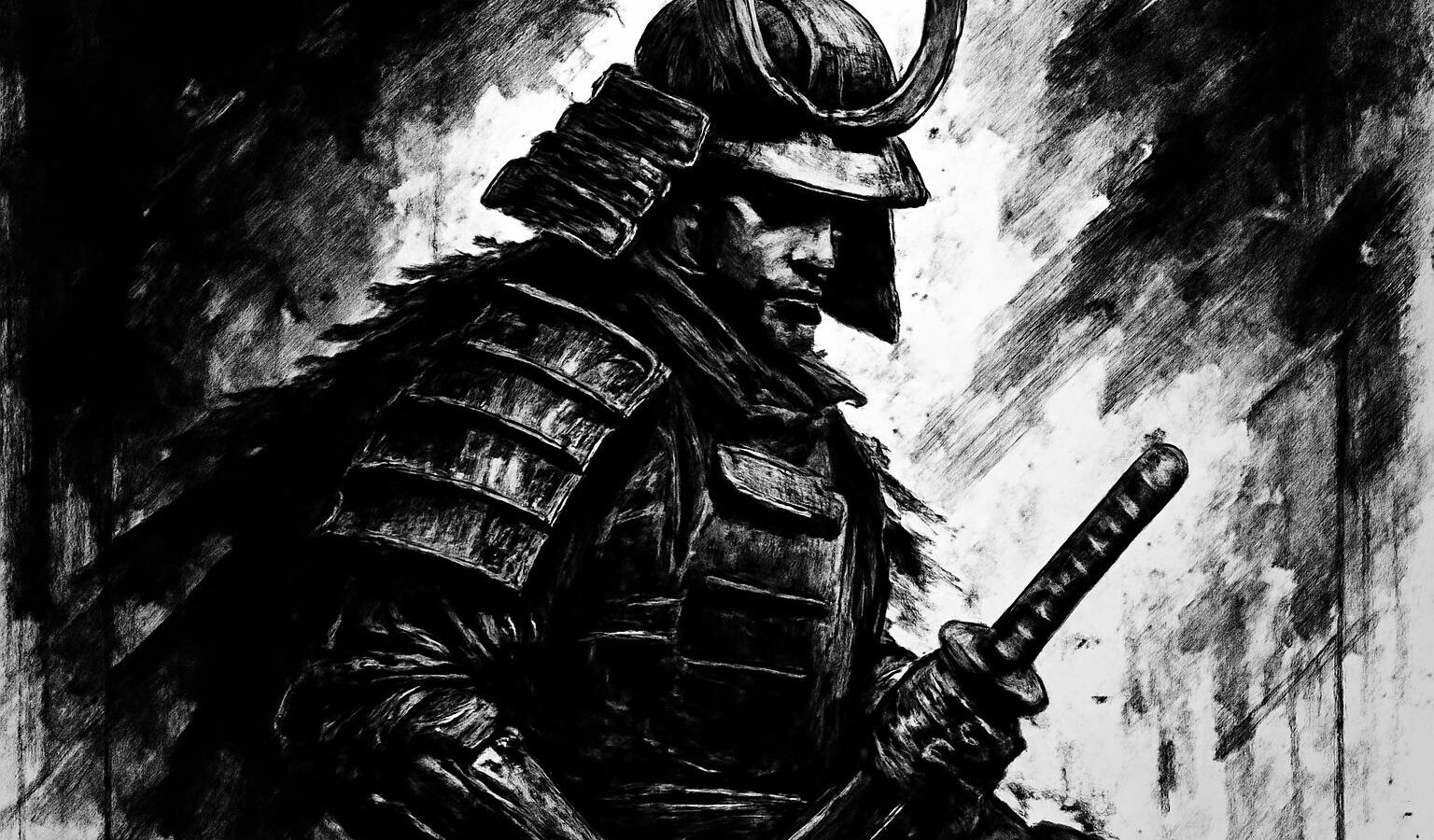
It is hard to overstate how good the artwork is. Inoue draws in a mix of pen, ink, and — increasingly as the series goes on — expressive brushwork that borrows from traditional Japanese sumi-e ink painting. Rain, muscle, grass, fear on a face: he renders all of it with a control that few artists in any medium can match. Duels unfold with a clarity and weight that make each strike feel final. If you buy one volume just to look at the pages, you will understand the hype instantly.
Themes: violence, mastery, and peace
Beneath the sword fights, Vagabond is a meditation on how a violent person might become a whole one. It asks whether mastery of killing can ever lead to peace, and it keeps returning to the idea that the greatest strength might be the ability to put the sword down. Inoue reportedly poured a great deal of his own thinking about art, discipline, and burnout into the book, and that personal weight is felt on every page.
One of the most striking stretches of the series steps away from duels almost entirely, following Musashi as he tries to grow rice in a starving village. It is a bold, contemplative detour that reframes strength as something patient and creative rather than destructive, and it stands as some of the finest, most humane material Inoue has ever drawn. That willingness to slow down and sit with an idea is exactly what elevates Vagabond above a straightforward action title — and, for some readers, exactly what tests their patience.
Meet the key figures
- Shinmen Takezo / Miyamoto Musashi — the wild youth who becomes a legend.
- Matahachi — his weak-willed childhood friend, the story's tragicomic mirror.
- Takuan Soho — the sly monk who first tries to civilize Takezo.
- Sasaki Kojiro — the deaf swordsman and Musashi's fated rival.
- Otsu — the woman whose devotion complicates both men's lives.
Content warning
This is a book for adults. Vagabond contains graphic, sometimes extreme violence — dismemberment, mass killing, and the raw aftermath of sword duels — plus nudity and mature themes. The violence is never played for cheap thrills, but it is unflinching. This is not a title for young children, and squeamish readers should go in prepared.
Pros and cons
Pros
- Arguably the most beautiful action art in all of manga
- A genuinely thoughtful meditation on violence and mastery
- Rich, human supporting cast
- Inoue's brushwork rewards slow, careful reading
Cons
- On indefinite hiatus and unfinished — no ending
- Deliberately slow; not for readers who want constant action
- Graphic violence; strictly for adults
Which edition should you buy?
Because the art is the main event, format matters more here than usual. The larger VIZBIG omnibus editions print the pages bigger and are the way to go if you can find them.
| Edition | Collects | Best for |
|---|---|---|
| Single volume (paperback) | 1 volume | Trying it out |
| VIZBIG Edition | 3 volumes, oversized | Appreciating the art |
| Used complete runs | Many volumes | Committed collectors |
For where it sits among the medium's best, see our guides to the best seinen manga and the best manga of all time.
Get Vagabond VIZBIG Edition, Vol. 1 on Amazon
The big caveat: it is unfinished
You cannot review Vagabond honestly without stressing this: it is on indefinite hiatus and has been for years. Inoue has not declared it cancelled, but there is no ending, and there may never be one. If the thought of investing dozens of hours in a story that stops mid-stride is a dealbreaker, this is not the book for you. Many readers, ourselves included, think the journey is so rewarding that it is worth reading anyway — but you deserve to know before you start.
It is also worth setting expectations about where the story stops. Because Vagabond is loosely based on the historical Musashi, readers who know the legend will recognize that the manga was building toward his famous duel with Sasaki Kojiro on Ganryu Island — a confrontation the series has spent hundreds of pages foreshadowing but never reaches. Whether that unresolved climax feels like a tragedy or simply an open door depends on the reader. Either way, the hundreds of pages you do get are so accomplished that many collectors treat it the way one might treat an unfinished symphony: incomplete, yet undeniably great.
The verdict
Vagabond is a masterpiece with an asterisk. As a reading experience, page for page, it is close to the summit of what the medium can do — gorgeous, patient, and profound. As a completed story, it does not exist. Weigh those two facts honestly and you will know whether it is for you. It earns its place near the top of our best manga of all time list and is essential reading for anyone exploring the manga hub.
Frequently asked questions
Is Vagabond finished?
No. The series has been on indefinite hiatus for years and remains incomplete at 37 volumes. There is currently no ending, which is the single biggest thing to know before starting.
Do I need to know the history of Miyamoto Musashi?
Not at all. Vagabond introduces everything you need. It is a loose adaptation of Eiji Yoshikawa's novel Musashi, but no prior knowledge is required.
Is Vagabond appropriate for younger readers?
No. It contains graphic violence, nudity, and mature themes, and is intended for adult readers.
Is Vagabond by the same author as Slam Dunk?
Yes. Both are by Takehiko Inoue. If you love his art here, our Slam Dunk review covers his other landmark work — a completed one, this time.