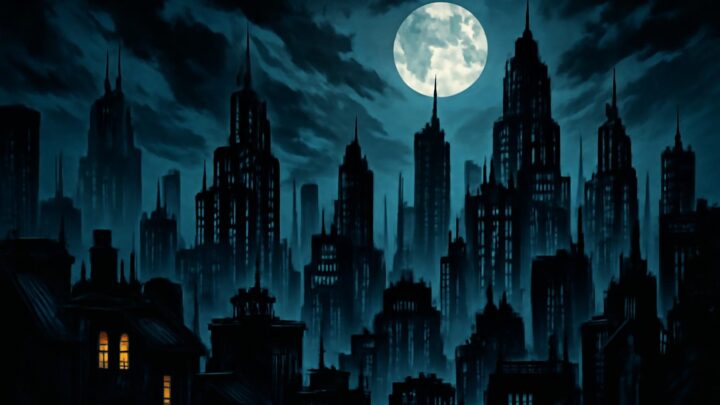
Gotham Central Review: The Best Cop Show DC Ever Printed
A review of Gotham Central by Brubaker, Rucka and Lark - a gripping police procedural set in Batman's shadow, and one of the best DC runs of its era.
 By Web Admin

What is it actually like to be a cop in a city protected by a man dressed as a bat? That is the brilliant, simple question behind Gotham Central, and the answer is one of the best comics DC published in the 2000s. Written by Ed Brubaker and Greg Rucka – two of the finest crime writers in the business – with moody, grounded art by Michael Lark, the series ran for 40 issues from 2003 to 2006. It won the Eisner Award and remains a touchstone for anyone who thinks superhero comics cannot be grown-up, character-driven drama. This is our full review.
Forget the Batman you know for a moment. Gotham Central keeps him mostly off-panel, a rumor and a resource, and trains its lens on the exhausted, underfunded detectives of the Gotham City Police Department instead. The effect is to make Gotham feel like a real place with a real workforce, one where the presence of a costumed vigilante is a genuine professional complication rather than a comfort.
That inversion is the whole trick, and it pays off constantly. When a rogue like the Joker turns up in a book this grounded, the dread is real, because you have spent issues with the ordinary people who now have to clean up after him. It is a lesson plenty of prestige crime dramas learned later: keep the extraordinary rare, and it becomes terrifying.

A superb police procedural set in Batman's shadow. Smart, adult, and grippingly human. Collects the full 40-issue…
Check price on Amazon$52.00as of Nov 4, 2026 7:32 pm UTCOur verdict (4.8/5): A superb police procedural set in Batman's shadow. Smart, adult, and grippingly human. Collects the full 40-issue run across various editions.
What is Gotham Central?
Gotham Central follows the detectives of the GCPD's Major Crimes Unit - the cops who catch the cases too strange or too dangerous for ordinary police work. That means dealing with Gotham's rogues gallery: the Joker, Mr. Freeze, Two-Face, and more. But the twist is that these are street-level professionals with no powers, no gadgets, and a deep ambivalence about the vigilante whose Bat-Signal hangs over their headquarters. Some of them resent relying on Batman. Some refuse to turn on the signal at all. The result is a book about ordinary people doing an impossible job.
Two writers, two shifts
In a clever structural choice, Brubaker and Rucka often split the workload the way a real precinct splits shifts - Brubaker leaning toward the day shift and its detectives, Rucka toward the night shift and characters like Renee Montoya. Both writers were at the top of their crime-writing game, and the seams never show. This is one of the reasons the run is so beloved and why it earns its place on our best comic book runs list.
The standout: Half a Life
The series' most celebrated arc is "Half a Life," a Rucka-penned story in which Detective Renee Montoya is forcibly outed as a lesbian by a villain and has her life torn apart. It is a landmark of LGBTQ representation in mainstream comics, handled with real empathy and zero melodrama, and it won multiple awards including an Eisner and a GLAAD Media Award. It is the emotional peak of the run and a big part of why the book still matters today.
The cast: cops, not capes
- Renee Montoya - the fierce, principled detective at the heart of the run's best stories.
- Crispus Allen - her thoughtful, morally grounded partner.
- Marcus Driver - a day-shift detective reeling from a partner's death.
- Maggie Sawyer - the no-nonsense commander of the Major Crimes Unit.
- Batman - a looming, mostly off-panel presence the cops both need and resent.
The art: Michael Lark's grounded Gotham
Michael Lark's artwork is the perfect match for the material. He draws Gotham as a real, rain-slicked, working city - all shadows, fluorescent squad rooms, and tired faces. There are no glossy pin-up poses here; this is a noir procedural, and Lark renders it with a grounded, cinematic weight that makes the rare appearances of costumed villains genuinely jarring and frightening. It is a masterclass in tone, and it sits squarely in the tradition our best crime and noir comics guide celebrates.
The craft extends to the small stuff: the clutter of a detective's desk, the body language of a suspect in an interview room, the way a squad room empties out at the end of a bad shift. Those details are what make the stakes feel human rather than operatic. When the book does reach for spectacle, it lands harder precisely because Lark has spent so long earning your belief in this ordinary, overworked version of Gotham.
Content notes
This is a mature crime comic. Expect murder scenes, strong language, and adult themes including homophobia, corruption, and workplace harassment. The violence is realistic rather than cartoonish, and the "Half a Life" arc deals frankly with being forcibly outed. It is best suited to older teens and adults.
Pros and cons
Pros
- A genuinely great police procedural, cape or no cape
- Complex, human characters you care about
- Landmark, award-winning storytelling in "Half a Life"
- Michael Lark's grounded, noir-perfect art
Cons
- Light on traditional Batman action
- Assumes some familiarity with Gotham's villains
- Ends before some character arcs fully resolve
Which edition should you buy?
DC has collected Gotham Central several ways over the years: as four standard trade paperbacks, as four deluxe hardcovers, and as a single complete omnibus. Here is how the options compare for a new reader.
| Edition | Collects | Best for |
|---|---|---|
| Book One (TPB) | Early issues | Trying it out |
| Deluxe hardcovers | Four volumes total | A premium read |
| Omnibus | The complete run | Best value for the whole story |
If you want to test the waters, start with the first paperback. If you already suspect you will love it - and crime fans usually do - the omnibus is the most satisfying and economical way to own the complete run.
Get Gotham Central Omnibus on Amazon
Where Gotham Central fits in your reading
You do not need to be a hardcore Batman reader to love this, but it does pair beautifully with the best of the mythos - see our best Batman graphic novels and best DC graphic novels guides for where to go next. Crime readers should also explore our best crime and noir comics list. And if you enjoy Michael Lark's grounded style here, do not miss his ongoing collaboration with Greg Rucka in our Lazarus review.
The verdict
Gotham Central proves that the most interesting story in a superhero city might belong to the people without powers. It is smart, adult, and deeply human - a police procedural that happens to be set in Batman's Gotham, and all the richer for keeping him at the edges. Whether you come for the crime writing, the characters, or Lark's art, it stands among the best superhero comics that dare to look past the cape. Essential.
Frequently asked questions
Do I need to read a lot of Batman comics first?
No. Gotham Central is largely self-contained and works as a standalone crime series. A little familiarity with Gotham's major villains helps, but the book explains what you need as it goes.
Does Batman appear in Gotham Central?
Rarely, and that is the point. Batman is a looming, mostly off-panel presence the police both rely on and resent. The focus stays firmly on the human detectives of the GCPD.
What is the Half a Life arc?
It is the run's most acclaimed story, in which Detective Renee Montoya is forcibly outed as a lesbian by a villain. It won multiple awards and is a landmark of representation in mainstream comics.
Is Gotham Central appropriate for younger readers?
It is a mature crime comic with murder, strong language, and adult themes including homophobia and corruption. We would steer it toward older teens and adults.
Next, dig into the wider mythos with our best Batman graphic novels guide, or explore more of the publisher in our best DC graphic novels list.