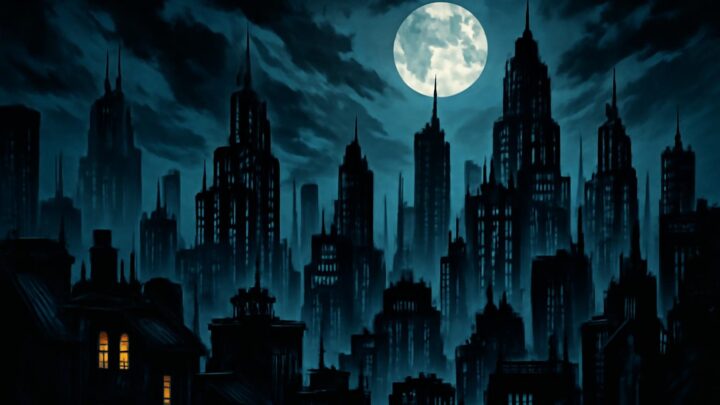
American Vampire Review: Scott Snyder’s Bloody US History
A full review of American Vampire, the Vertigo horror epic by Scott Snyder and Rafael Albuquerque that reinvented the vampire for the New World.
 By Web Admin

By the time American Vampire arrived in 2010, the vampire had been thoroughly declawed by a decade of sparkling teen romance. Then Scott Snyder and artist Rafael Albuquerque made them terrifying again. Published by DC’s mature-readers imprint Vertigo, with horror legend Stephen King co-writing the very first arc, this Eisner-winning series reimagines vampires as an evolving species and uses them to tell a blood-soaked secret history of the United States. It is nasty, ambitious, and one of the best horror comics of its era.
This review covers American Vampire in full: the premise, the standout creators, the content you should brace for, which editions to buy, and whether the saga sticks the landing.
What is American Vampire?
American Vampire is a horror comic created by writer Scott Snyder and artist Rafael Albuquerque, published by Vertigo, the mature imprint of DC Comics. It launched in 2010, and famously, novelist Stephen King co-wrote a parallel storyline running through the first five-issue arc, marking his debut as a comics writer. The series went on to win the Eisner Award for Best New Series.
The central idea is simple and clever: vampires are not one monolithic thing but a set of distinct species that evolve over time, each with different strengths and weaknesses. The story introduces the first vampire of a new, uniquely American bloodline, one strong enough to walk in the sun, and follows the fallout across the decades of the 20th century.
The story: a horror history of America
Volume 1 runs two timelines at once. In the King-scripted thread, we meet Skinner Sweet, a vicious outlaw in the Old West of the 1880s who becomes the first of the new breed. In Snyder’s thread, set in 1920s Hollywood, aspiring actress Pearl Jones is left for dead by the old European vampires running the studios, and is turned by Skinner into something they never expected. Pearl and Skinner become the twin engines of the whole saga.
From there the series marches forward through American history, war-era Las Vegas, World War II in the Pacific, the 1950s, and beyond, using the spread of this new vampire species as a lens on the country’s dark undercurrents. Each cycle deepens the mythology while delivering self-contained horror-thriller stories.
That anthology-of-eras structure is what keeps the saga fresh across its long run. Instead of trapping the same characters in one setting, Snyder lets the story leap decades between arcs, so a Prohibition-era shootout gives way to a jungle war and then to Cold War paranoia, each with its own flavor of dread. The through-line is Skinner and Pearl, whose bitter, decades-spanning relationship anchors all the period hopping. It is a smart way to keep a horror series from going stale, and it lets the book quietly argue that the monsters and the history feeding them are the same thing.
The creators: Snyder, Albuquerque, and King
Scott Snyder was a relative newcomer when this launched, and it made his name before he went on to a celebrated Batman run. His writing here is confident and character-driven, treating horror as a vehicle for real people under pressure. Rafael Albuquerque’s art is the series’ visual signature, kinetic, expressive, and genuinely frightening when it needs to be, with monster designs that reject any hint of the romantic vampire.
And then there is Stephen King. His Skinner Sweet origin arc is exactly the mean, propulsive Western horror you would hope for from him, and it gives the opening volume real marquee weight. It remains one of the very few times King has written directly for the comics medium.
Content warning: this is graphic horror
Be clear about what you are getting. American Vampire is a mature-readers Vertigo book, and it earns that rating. Expect graphic, bloody violence, gore, on-page killings, disturbing imagery, sexual content, and strong language throughout. The horror is the point, and it is not softened. This is a book for adult horror fans, not for children or the squeamish. If you want gentler fare, look elsewhere first.
Meet the cast
- Skinner Sweet — the first American vampire, a charming and utterly ruthless outlaw.
- Pearl Jones — the wronged starlet turned survivor and the heart of the series.
- Henry Preston — Pearl’s human love, whose mortality raises the stakes.
- The Vassals of the Morning Star — a secret order hunting vampire threats.
Pros and cons
Pros
- Genuinely scary vampires, no romance-novel softness
- A rare Stephen King comics co-writing credit
- Clever anthology-of-eras structure keeps it fresh
- Eisner-winning art from Rafael Albuquerque
Cons
- Graphic gore and mature content throughout
- The many spin-off miniseries can confuse reading order
- Bleak tone with few soft landings
How American Vampire compares to other horror comics
If you are building a horror shelf, here is how it sits against the titles we most often recommend.
| Book | Style | Length | Approx. price | Best for |
|---|---|---|---|---|
| American Vampire, Vol. 1 | Period vampire horror | ~200 pp | ~US$20 | Scary, stylish vampires |
| Wytches | Folk body-horror | ~200 pp | ~US$18 | Dread and unease |
| Locke & Key | Dark fantasy horror | ~150 pp/vol | ~US$20/vol | Family horror epic |
For the wider genre, see our guides to the best horror comics and the best vampire comics. Snyder fans should also read our Wytches review, his later collaboration with artist Jock.
Which edition should you buy?
American Vampire has been collected in a few formats, and the reading order gets a touch tangled thanks to the spin-offs. Here is the clean version.
| Edition | Collects | Approx. price | Best for |
|---|---|---|---|
| Volume 1 paperback | First five issues (with King arc) | ~US$20 | Trying it out |
| Later trade volumes | Subsequent arcs, one each | ~US$18-20 | Continuing readers |
| Complete Edition (oversized HC) | Multiple volumes each | ~US$40-50 | Best value collection |
Start with the Volume 1 paperback for the Stephen King arc, then jump to the oversized Complete Editions if you get hooked, which most horror fans do.
AmazonCheck price on AmazonThe verdict
American Vampire did exactly what it set out to do: it made vampires frightening again and turned them into a lens on American history. It is smart, savage, beautifully drawn horror with a genuine literary pedigree, and the first volume remains one of the best on-ramps to mature comics horror. It sits high on our best Vertigo comics list and is a fixture of our best comic book runs. If you like your vampires with teeth, do not miss it. It also lives near the top of the DC-adjacent horror shelf you will find in our DC hub.
Frequently asked questions
Did Stephen King really write American Vampire?
Yes. Stephen King co-wrote a parallel storyline through the first five-issue arc, telling the origin of Skinner Sweet. It marked his debut writing directly for comics.
Is American Vampire finished?
The core saga reached a conclusion across its main run and a later cycle. It reads as a complete, satisfying story, with several spin-off miniseries filling in corners of the world.
Is American Vampire appropriate for teens?
It is a mature-readers Vertigo title with graphic gore, violence, sexual content, and strong language. We would keep it to adult and older horror-savvy readers. See our horror comics guide for the range.
What order should I read American Vampire in?
Start with Volume 1 and follow the numbered trades, or use the oversized Complete Editions, which bundle the main series and its miniseries in intended reading order. See our best vampire comics for companions.