Plastic Man Reading Order: Where to Start
From Jack Cole's Golden Age to Kyle Baker's zany run.
 By Web Admin

Plastic Man is one of comics’ great oddballs — a reformed crook turned wildly elastic hero who can stretch, squash, and reshape himself into anything, all while cracking jokes. He predates most of DC’s roster, he inspired everyone from the Fantastic Four’s Mr. Fantastic to countless cartoon characters, and he remains the funniest A-list hero the medium has produced. He is also weirdly hard to start reading, because his best material is scattered across eight decades and several tonal reinventions.
This guide fixes that. Below is a Plastic Man reading order that takes you from Jack Cole’s genre-defining Golden Age originals to Kyle Baker’s Eisner-winning modern run, with the key team appearances in between. Whether you want vintage anarchy or slick modern comedy, there’s a clear on-ramp here.
The books to buy, in reading order
These are the collected editions that cover the path below, in the order to read them.
| Pick | Best for | Why | Price | Buy |
|---|---|---|---|---|
| Plastic Man: Rubber Bandits | Start here |
| See Amazon | View on Amazon |
| DC Finest: Plastic Man: The Origin of Plastic Man | Then: Jack Cole's originals |
| $24.91as of Nov 12, 2026 9:23 am UTC | View on Amazon |
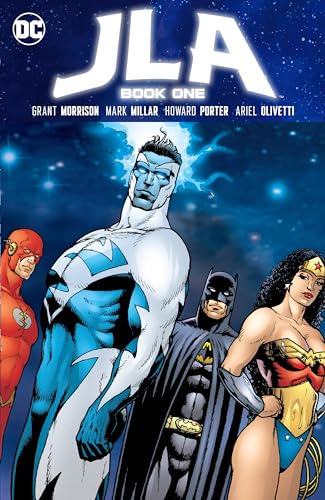
| JLA Book One | Then: his modern League role |
| $31.11as of Nov 12, 2026 3:36 pm UTC | View on Amazon |
| The Terrifics: The Complete Collection | Then: the fun team book |
| $32.80as of Nov 12, 2026 9:23 am UTC | View on Amazon |
| Plastic Man (2018) | Then: a modern solo mystery |
| $21.87as of Nov 12, 2026 9:23 am UTC | View on Amazon |



Prices and availability change; check Amazon for today’s price. As an Amazon Associate we earn from qualifying purchases.

The best modern entry point — Eisner-winning, laugh-out-loud, and gorgeous. Kyle Baker writes and draws a Plastic…
Check price on AmazonOur take: The best modern entry point — Eisner-winning, laugh-out-loud, and gorgeous. Kyle Baker writes and draws a Plastic Man that finally matches Jack Cole's energy. Rubber Bandits collects part of the acclaimed 2004 run.
Who is Plastic Man?
Plastic Man was created by the legendary Jack Cole and first appeared in Police Comics #1 in 1941. His origin: small-time crook Patrick "Eel" O'Brian is shot and doused with acid during a factory heist, gaining a body he can stretch into any shape or size. Abandoned by his gang, he reforms and becomes a hero — and, eventually, an FBI agent — using his powers and a talent for disguise to fight crime. His sidekick, the pun-named Woozy Winks, is one of comics' first great comic-relief partners.
What set Cole's work apart was its sheer visual invention and slapstick anarchy. Plastic Man wasn't just elastic in body; the whole strip was elastic in tone, decades ahead of its time. Later DC ownership folded him into mainstream continuity, where he's been a Justice League member, a fan-favorite comic foil, and a surprisingly poignant character in the right hands.
Reading order at a glance
| Order | Book | Creators | Year | Why read it |
|---|---|---|---|---|
| 1 | Plastic Man Archives | Jack Cole | 1941–1950 | The genre-defining originals |
| 2 | JLA (Morrison era) | Morrison / various | 1997–2000 | His modern League role |
| 3 | Plastic Man by Kyle Baker | Kyle Baker | 2004 | Eisner-winning modern run |
| 4 | The Terrifics | Lemire / various | 2018–2020 | Fun team book |
| 5 | Plastic Man (2018 miniseries) | Simone / Melo | 2018 | A modern solo mystery |
1. Jack Cole's Golden Age originals (1941–1950)
To understand why Plastic Man matters, read the source. Jack Cole's stories in Police Comics and the character's own title are riotous, inventive, and formally daring — Cole treated the page as a rubber toy, and the results still feel fresh. These are collected in the Plastic Man Archives hardcover series and various reprint volumes. Comics historians routinely rank Cole's Plastic Man among the finest cartooning of the era. If you love the medium's history, this is essential — and highly entertaining — reading.
2. JLA and the modern DC role (1997–2000)
Grant Morrison's landmark JLA run reintroduced Plastic Man to a new generation as a full-fledged member of the Justice League, using him as both comic relief and, surprisingly, an emotional anchor. He becomes a genuinely beloved team player here, and it's the run that re-established him in the modern DC Universe. For the full team context, see our Justice League reading order.
3. Plastic Man by Kyle Baker (2004) — the modern must-read
This is the one to start with if you want a self-contained modern gem. Cartoonist Kyle Baker wrote and drew a 20-issue run (opening with the "On the Lam" arc) that channels Jack Cole's anarchic spirit through a contemporary lens. It's genuinely laugh-out-loud funny, visually explosive, and it won multiple Eisner Awards, including Best Humor Publication. It's the rare superhero comic that's actually a comedy first — and it's brilliant at it. Collected in trade paperback.
4. The Terrifics (2018–2020)
Jeff Lemire's The Terrifics teamed Plastic Man with Mr. Terrific, Metamorpho, and Phantom Girl in a joyful, Fantastic-Four-flavored adventure book. It's a great showcase for Plas in an ensemble and one of the most purely fun DC titles of its era. A solid next step after the Baker run if you want more of the character in a team setting.
5. Plastic Man (2018 miniseries)
Gail Simone and Adriana Melo delivered a six-issue miniseries that dug into Eel O'Brian's roots as a reformed crook, blending comedy with a genuine mystery and a lot of heart. It's a modern solo take that takes the character seriously without losing his sense of humor — recommended if you want to see what a contemporary ongoing vision looks like.
Why Plastic Man still matters
It's easy to write Plastic Man off as a joke character, but that undersells his importance. Jack Cole's original strip was one of the most formally inventive comics of its era — Cole bent panels, borders, and figures in ways that wouldn't become common for decades, and cartoonists from Will Eisner onward cited him as a master. The character also occupies a specific and valuable niche in a superhero landscape that trends grim: he's genuinely, reliably funny, and the medium needs that as much as it needs another brooding vigilante.
There's real pathos under the pratfalls, too. Eel O'Brian is a reformed criminal who never fully trusts his own reformation, and the best modern writers — Morrison, Baker, Simone — mine that anxiety for surprising emotional depth. A hero who can literally become anything is quietly a story about identity, and Plas at his best is as much a character study as a comedy. That combination of slapstick, craft, and heart is why he keeps getting rediscovered by each new generation of creators.
He's also a useful litmus test for a comics fan. Readers who only want grounded realism tend to bounce off him, while those who love the medium's capacity for pure cartoon invention treasure him. If you fall in the second camp, Plastic Man is one of the great untapped pleasures on the shelf — a nearly century-old character who still feels wilder and more experimental than most of what's published today.
Where to start, by reader type
- Want the funniest, most accessible book? Kyle Baker's Plastic Man (2004).
- Love comics history? The Plastic Man Archives by Jack Cole.
- Prefer team adventures? Grant Morrison's JLA or The Terrifics.
- Want a modern solo mystery? The 2018 miniseries.
He's an essential, underrated part of the DC canon — a regular in our best DC graphic novels discussions and a reminder that the best superhero comics aren't all grim.
Get Plastic Man: Rubber Bandits on Amazon
A note for collectors
Because Plastic Man debuted in 1941, his earliest appearances are genuine Golden Age treasures. Police Comics #1 is a key book, and high-grade copies are seriously scarce. If you're curious about that side of the hobby, see our guides to first appearance comics and the most valuable comic books — Golden Age keys like this are exactly the kind of issue those pieces cover. For everything else in DC's world, the DC hub is your starting point.
Frequently asked questions
Who created Plastic Man?
Jack Cole created Plastic Man, debuting the character in Police Comics #1 in 1941. Cole's original run is widely regarded as some of the greatest cartooning of the Golden Age.
What's the best Plastic Man comic to start with?
Kyle Baker's award-winning 2004 run is the best modern starting point — funny, self-contained, and beautifully drawn. For historical context, Jack Cole's originals are the essential source.
Is Plastic Man a Justice League member?
Yes. He was reintroduced as a core Justice League member during Grant Morrison's JLA run, where he serves as both comic relief and a valued teammate.
Is Plastic Man related to Marvel's Mr. Fantastic?
Not officially, but Plastic Man predates him by two decades and clearly influenced the whole family of stretchy heroes. Cole's inventive elasticity set the template others followed.
Is Plastic Man good for kids?
Plastic Man is one of the more kid-friendly corners of DC, because his stories run on slapstick, visual gags and silly villains rather than grim violence. Kyle Baker's 2004 run is a good fit for older kids and up. Jack Cole's Golden Age originals are fun too, but they are products of the 1940s, with some dated humour and crime-comic violence worth previewing before you hand them to a young reader.
Who is Woozy Winks?
Woozy Winks is Plastic Man's bumbling sidekick, introduced in Jack Cole's Golden Age stories. He is a lazy, accident-prone former crook whose dumb luck keeps him safe, and he serves as the comic foil to Plas's stretchy chaos. Woozy turns up in many later versions too, including Kyle Baker's run, so if you start anywhere on this list you will probably meet him.
What is the difference between Plastic Man and Elongated Man?
Plastic Man and Elongated Man are both stretchy DC heroes, but they are separate characters. Plastic Man is Eel O'Brian, a reformed crook whose acid accident lets him reshape his body into almost anything, and his stories are wild comedy. Elongated Man is Ralph Dibny, a detective who gained his stretching powers from a soda extract and is best known for mystery-solving and his marriage to Sue Dibny.
Is Plastic Man worth reading if I prefer serious superhero comics?
Plastic Man is worth a try even if you prefer serious superhero comics, because the best of his books are masterclasses in cartooning. Jack Cole's page layouts and Kyle Baker's comic timing are studied by artists for good reason. Think of him as a palate cleanser: Kyle Baker's run is a quick, funny read that sits well between heavier books, and his JLA appearances show he can play straight when it counts.