The History of Superhero Comics: From Superman to the Modern Age
How a single 1938 comic launched the Golden, Silver, Bronze, and Modern Ages of superheroes.
 By Web Admin
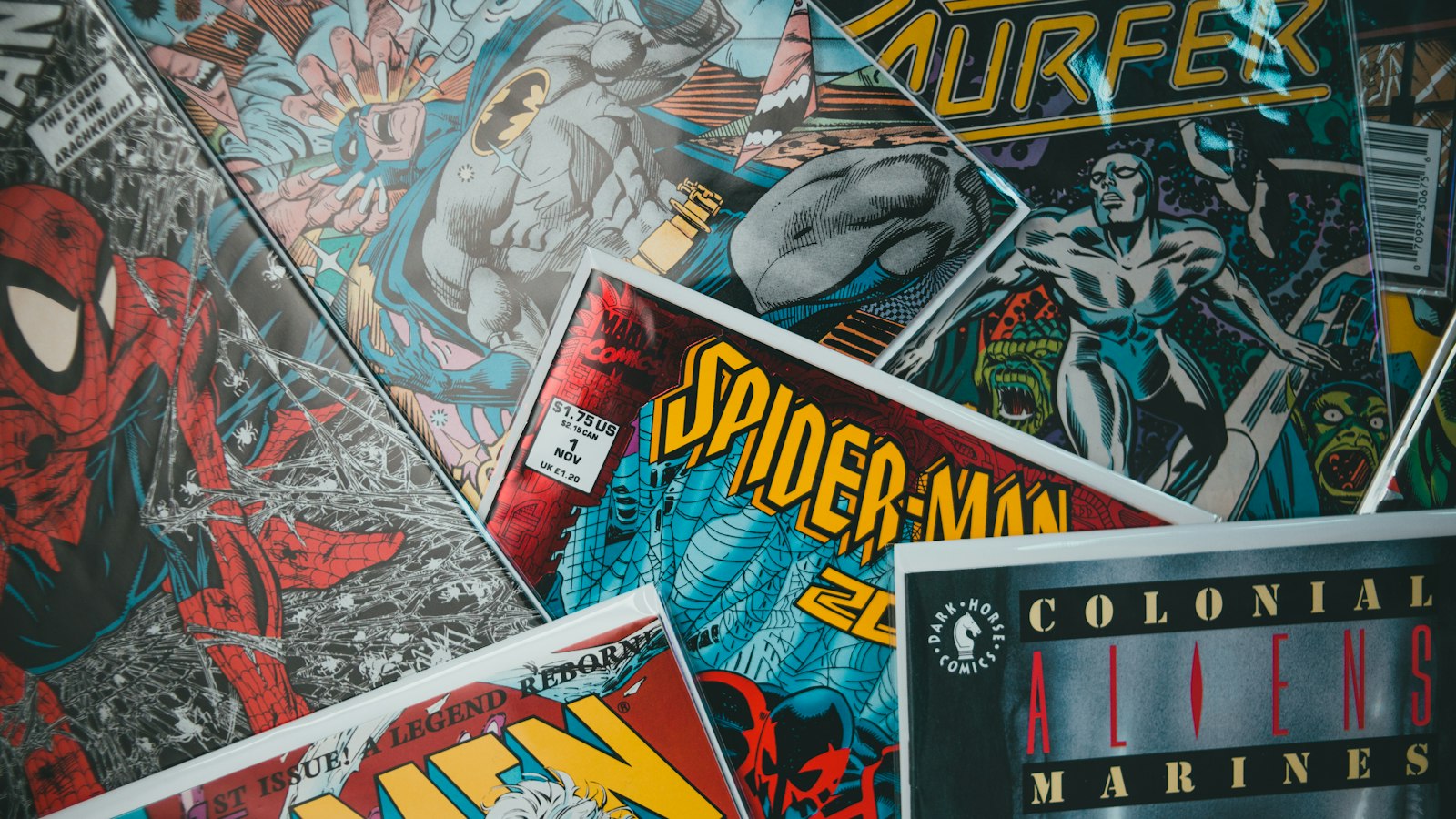
The superhero is arguably the most influential storytelling invention of 20th-century American popular culture, and its history has a remarkably clean starting point. In 1938, a single comic featuring a caped strongman from another planet kicked off a genre that would come to define an entire medium. From that spark, historians and collectors have long divided the story into a series of ages, each with its own tone, business logic, and defining creators.
This is an evergreen, fact-checked walk through those ages, built on real titles, creators, and years. Where sales or values would be speculative, we keep to direction and scale rather than inventing precise figures.
Before the cape: pulps and newspaper strips
Superheroes did not appear from nothing. They were assembled from ingredients already circulating in early 20th-century entertainment. Pulp magazines gave readers larger-than-life adventurers such as Doc Savage and the mystery-man vigilante The Shadow. Newspaper comic strips supplied serialized action heroes, including the science-fiction adventurers Buck Rogers and Flash Gordon, and the two-fisted detective Dick Tracy.
The comic book as a physical format also had to arrive first. In the early-to-mid 1930s, publishers began collecting and then commissioning original material in the stapled, color pamphlet we still recognize today. Famous Funnies (1934) is often cited as an early newsstand comic book. The stage was set; all it needed was a character big enough to define the form.
The Golden Age: Superman and 1938
The Golden Age of comics is conventionally dated to 1938, when Action Comics #1 introduced Superman, created by writer Jerry Siegel and artist Joe Shuster and published by the company that would become DC Comics. Superman was an immediate sensation and effectively invented the superhero template: secret identity, costume, extraordinary powers, and a mission to help others.
A wave of characters followed almost immediately. Batman, created by Bob Kane and Bill Finger, debuted in Detective Comics #27 in 1939. Wonder Woman, created by William Moulton Marston, arrived in 1941. Over at the company that would become Marvel, Timely Comics launched Captain America (by Joe Simon and Jack Kirby) in 1941, along with the Human Torch and Namor the Sub-Mariner. Superhero comics boomed through World War II, when patriotic heroes were everywhere, before the genre cooled in the postwar years and readers drifted toward crime, horror, romance, and western titles.
The comics code and the postwar slump
The early 1950s brought a backlash. Amid public anxiety about crime and horror comics, the psychiatrist Fredric Wertham’s 1954 book Seduction of the Innocent argued that comics harmed children, fueling congressional hearings. In response, the industry adopted the self-censoring Comics Code Authority in 1954. The Code sharply restricted violence, horror, and mature content, reshaping what comics could publish for decades and hastening the decline of the horror and crime genres that had eclipsed superheroes.
With those genres constrained, publishers looked for a way to revive the costumed hero. That revival would define the next age.
The Silver Age: revival and the birth of Marvel
The Silver Age is usually dated to 1956, when DC’s Showcase #4 reintroduced The Flash in a modernized, science-fiction-flavored form. The success of that reinvention sparked a superhero renaissance, and DC soon revamped its lineup and formed the Justice League of America in 1960.
The era’s most consequential development, though, was the rise of Marvel Comics. Beginning with Fantastic Four #1 in 1961, writer Stan Lee working with artists Jack Kirby and Steve Ditko created a new kind of superhero: flawed, argumentative, and human. In quick succession came The Incredible Hulk (1962), Spider-Man (in Amazing Fantasy #15, 1962), The X-Men and The Avengers (both 1963), and many more. Marvel’s characters had money troubles, self-doubt, and interpersonal drama, and readers responded powerfully. The Big Two rivalry between DC and Marvel that still defines the industry took its modern shape here.
The Bronze Age: relevance and darker themes
The Bronze Age is commonly dated from around 1970 to the mid-1980s. Art grew more detailed and storytelling more socially conscious. Comics began tackling real-world issues; a celebrated 1971 Green Lantern and Green Arrow storyline by Denny O’Neil and Neal Adams confronted drug addiction directly, and Marvel published anti-drug Spider-Man issues the same year that were printed without Code approval, helping to loosen the Comics Code’s grip.
The era also saw death and consequence return to superhero stories, most famously the 1973 death of Gwen Stacy in The Amazing Spider-Man, often cited as the symbolic end of the innocent Silver Age sensibility. New, edgier characters emerged, and creators such as Chris Claremont transformed The X-Men into a sprawling saga about prejudice and found family that would dominate the following decade.
The Modern Age: deconstruction and the direct market
The Modern Age, generally dated from the mid-1980s onward, opened with a creative earthquake. In 1986, two landmark works reframed what superhero comics could be: Alan Moore and Dave Gibbons’s Watchmen and Frank Miller’s Batman: The Dark Knight Returns. Both treated superheroes with adult seriousness, exploring politics, psychology, and violence, and they proved comics could be sophisticated literature for grown-ups. Please note that many defining Modern Age titles carry mature content.
The business changed too. The direct market, which sold non-returnable comics through specialty shops, gave creators room for riskier, more serialized work. A speculator bubble in the early 1990s inflated print runs and then burst, reshaping the industry. In 1992, a group of star artists left Marvel to found Image Comics, cementing the creator-owned model. The decades since have brought acclaimed, character-redefining runs and, eventually, the screen adaptations that made these characters globally famous.
The ages at a glance
Collectors and historians use these era labels constantly, so here is a compact timeline. The exact boundaries are debated, but the shape is widely agreed upon.
| Age | Approx. period | Defining moment | Character of the era |
|---|---|---|---|
| Golden Age | 1938 to mid-1950s | Action Comics #1 (1938), Superman debuts | Patriotic, wartime, template-setting heroes |
| Postwar slump | Early 1950s | Comics Code Authority (1954) | Superheroes fade; crime and horror rise then fall |
| Silver Age | 1956 to c.1970 | Showcase #4 (1956); Fantastic Four #1 (1961) | Flawed, human Marvel heroes; revived DC icons |
| Bronze Age | c.1970 to mid-1980s | Green Lantern/Green Arrow relevance run (1971) | Socially conscious, darker, consequence-driven |
| Modern Age | Mid-1980s to today | Watchmen and The Dark Knight Returns (1986) | Deconstructed, adult, creator-owned |
If you want a fuller breakdown of how collectors use these divisions, our comic book ages explained guide goes deeper on the boundaries and why they matter.
The Big Two: DC versus Marvel
For most of this history, two publishers have shaped the genre. DC Comics, home of Superman, Batman, and Wonder Woman, built the original template and the first shared universe. Marvel Comics, revitalized in the Silver Age, countered with grounded, emotionally complex characters and an interlocking continuity that felt like a living world.
Their rivalry has driven the industry’s biggest innovations, from the line-wide crossover event to the modern reading-order-friendly relaunch. To dig into each, browse our Marvel hub and DC hub. And because the superhero story is not only a Big Two story, our look at women in comics traces creators and characters too often left out of the standard timeline.
Key shifts that defined the genre
Across all these ages, a handful of recurring shifts explain how superhero comics evolved:
- From simple to psychologically complex. Heroes went from square-jawed do-gooders to conflicted people with real problems.
- From episodic to serialized. Standalone adventures gave way to long-form sagas and universe-spanning events.
- From work-for-hire to creator-owned. The founding of Image Comics in 1992 made creator ownership a mainstream option.
- From newsstand to direct market to bookstore. Distribution moved from spinner racks to specialty shops to today’s collected-edition-driven bookstore channel.
Understanding these shifts is the fastest way to make sense of any superhero comic you pick up, because it tells you what its creators were reacting to.
Where to start reading
The best entry point into this history is a self-contained masterpiece that shows how far the genre traveled. A Modern Age landmark demonstrates the sophistication superheroes reached, needs no prior continuity, and reads as a complete story. Collected editions are ideal because they give you the whole arc in one affordable, well-produced volume.
AmazonCheck price on AmazonFrom there, dive into our best superhero comics rankings for the essential reads, and if you want a guided path into the shared universe, our Marvel reading order for beginners and best Marvel graphic novels sequence the entry points. For the other great comics tradition, compare this arc with our history of manga.
Frequently asked questions
What was the first superhero comic?
Action Comics #1, published in 1938, introduced Superman and is universally regarded as the birth of the superhero genre and the start of the Golden Age. Superman, created by Jerry Siegel and Joe Shuster, established the template of costume, secret identity, and powers that defined everything after.
What are the ages of comic books?
The main divisions are the Golden Age (1938 to the mid-1950s), the Silver Age (roughly 1956 to 1970), the Bronze Age (roughly 1970 to the mid-1980s), and the Modern Age (mid-1980s to today). The exact boundaries are debated, but this framework is standard among collectors and historians.
When did Marvel Comics as we know it begin?
The modern Marvel took shape in the Silver Age, beginning with Fantastic Four #1 in 1961 by Stan Lee and Jack Kirby. Spider-Man, the Hulk, the X-Men, and the Avengers all followed within a few years, establishing Marvel’s flawed, human style of hero.
Why is 1986 considered so important?
In 1986, Watchmen by Alan Moore and Dave Gibbons and The Dark Knight Returns by Frank Miller reimagined superheroes as vehicles for adult, literary storytelling. Together they helped launch the Modern Age and proved that comics could be sophisticated fiction for grown readers.
Keep exploring: browse the Marvel hub and DC hub, or start reading with our best superhero comics list.