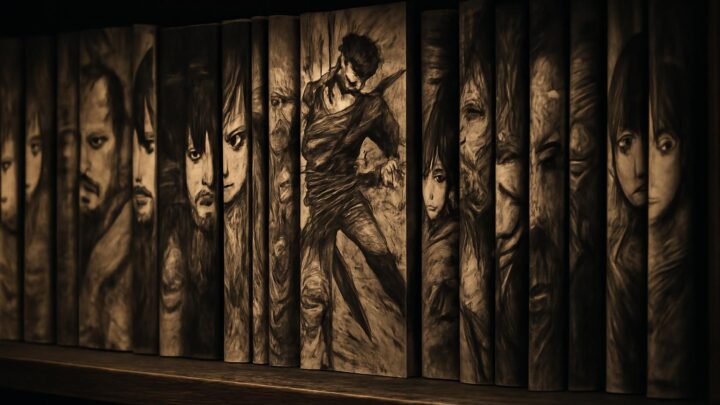
The Indie Comics Renaissance: How Creator-Owned Books Took Over
How creator-ownership, Substack, and Kickstarter rewrote who controls comics.
 By Web Admin

For most of the twentieth century, the two biggest names in American comics owned nearly everything a reader touched. Writers and artists were hired hands who built beloved characters they would never own, on stories they could not control, for a page rate and little more. That arrangement is called work-for-hire, and for decades it was simply how the business worked. Today it is only one path among several, and increasingly not the one where the most talked-about books are made. We are living through a genuine creator-owned renaissance, and it has reshaped what gets published, who profits, and what ends up on your shelf.
This is an evergreen look at how that shift happened: the founding of Image Comics, the slow migration of top talent away from work-for-hire, and the newer engines of Substack and Kickstarter that let creators reach readers directly. We will keep the facts grounded and the numbers honest, because the story is remarkable enough without exaggeration.
What creator-owned actually means
The phrase gets thrown around loosely, so it is worth being precise. A creator-owned comic is one where the writer and artist retain the copyright and control of the characters and story, rather than assigning those rights to a publisher. The creators decide where the book is printed, when it ends, whether it gets adapted, and who profits if it does. The publisher, in this model, is a distribution and production partner, not the owner of the material.
Contrast that with the traditional work-for-hire model, where a company owns the characters outright. A writer can craft a defining, era-shaping run on a company-owned hero and walk away owning none of it. Neither model is inherently evil, but the difference in incentives is enormous, and it explains almost everything about the modern indie boom. If you want a broad map of this corner, our indie comics hub is the place to start.
Image Comics and the 1992 turning point
The single most important event in this story is the founding of Image Comics in 1992 by a group of star artists who left Marvel. Frustrated that they generated enormous sales yet owned none of the characters they drew, these creators walked away at the height of their commercial power and built a publisher on one radical principle: each creator would own their own work, and Image itself would own none of it. Image would provide the imprint and the distribution muscle; the books belonged to their makers.
It was a stunning gamble, and it worked. Image quickly became a major publisher, and its founding proved that top-tier talent could leave the security of the big two and thrive on their own terms. Just as importantly, it established a durable institutional home for creator-ownership that still anchors the movement today. Decades later, Image remains the flagship of the creator-owned model and a launchpad for some of the most acclaimed comics of the modern era. Our roundup of the best Image Comics shows just how deep that catalog runs.
Why creators walked away from work-for-hire
The Image founders were the dramatic example, but the migration away from work-for-hire has been steady and rational. The reasons are consistent across generations of talent:
- Ownership and upside. If a creator-owned book becomes a hit or gets adapted to screen, the creators share in that success rather than watching someone else collect it.
- Creative control. No editorial mandates, no forced crossovers, no character resets to serve a shared universe. The story ends when the creators decide it ends.
- A finished, personal vision. Creator-owned books tend to have clear beginnings, middles, and ends, because one team is steering the whole journey.
- Back-end and reprint revenue. Owners keep earning from collected editions, licensing, and adaptations for as long as the work stays in print.
None of this means work-for-hire vanished. Plenty of brilliant creators still choose to play in the big shared universes, and those characters remain hugely popular across our Marvel and DC hubs. But for a creator with a personal story to tell, ownership is now a realistic, respectable, and often more lucrative choice.
Substack and the direct-to-reader newsletter wave
If Image built the institutional home for creator-ownership, the newer chapters are about cutting out the middle layers entirely. The first of these is the newsletter platform Substack, which recruited a wave of established comics writers and artists with funded deals to publish serialized, creator-owned work directly to subscribers.
The appeal is straightforward. A creator with an existing following can reach that audience directly, keep the rights, and be paid for the work up front rather than gambling on sales. Readers, in turn, get the material delivered to their inbox and often collected into print later. It is a direct relationship between maker and audience with fewer gatekeepers in between. The model is still evolving, but it demonstrated something important: a recognizable creator no longer strictly needs a traditional publisher to launch an owned series. Our overview of Substack creator-owned comics digs into how this wave took shape.
Kickstarter and the crowdfunding engine
The second direct-to-reader engine is crowdfunding, and Kickstarter in particular has become a genuine pillar of the indie comics economy. Instead of convincing a publisher that a book will sell, a creator pitches directly to readers, who pledge money in advance to fund the printing. If enough people back it, the book gets made; the creator keeps ownership and a far larger share of the revenue than a traditional deal would allow.
Crowdfunding has quietly become one of the largest sources of funding for independent comics, reportedly channeling many millions of dollars to creators every year across thousands of successful campaigns. It has been especially transformative for creators outside the mainstream: debut talent, niche genres, oversized art books, and formats that traditional publishers consider too risky. If you have ever wanted to back a book directly, our Kickstarter comics guide walks through how it works and how to back campaigns wisely.
The engines of the renaissance at a glance
Each of these channels solves the same core problem — how a creator keeps ownership while still reaching readers — in a different way. Here is how they compare.
| Channel | How creators use it | Who owns the work | Best for |
|---|---|---|---|
| Image Comics (est. 1992) | Publisher partner handles print and distribution | The creators, fully | Ongoing series with wide retail reach |
| Substack | Serialized releases to email subscribers | The creators | Established names with an existing audience |
| Kickstarter | Reader pledges fund printing in advance | The creators | New talent, niche genres, deluxe formats |
| Traditional work-for-hire | Creator writes or draws company characters | The publisher | Playing in established shared universes |
Notable modern creator-owned successes
The proof of the renaissance is on the shelf. Some of the most acclaimed and best-selling comics of the last two decades are creator-owned, and many have crossed over into mainstream culture through screen adaptations. A few well-known examples show the range:
- Saga — Brian K. Vaughan and Fiona Staples’ sprawling space-opera fantasy, one of the defining creator-owned hits of its generation and a perennial award winner.
- The Walking Dead — Robert Kirkman and Tony Moore’s black-and-white survival horror comic, which grew from an indie title into a television empire while remaining creator-owned.
- Invincible — Kirkman and artists Cory Walker and Ryan Ottley’s superhero saga, later adapted into an acclaimed animated series.
- Paper Girls, The Wicked + The Divine, Monstress, Something is Killing the Children — a deep bench of owned series spanning sci-fi, fantasy, and horror, several already adapted or optioned for screen.
What unites these is not a genre but a structure: a single creative vision, told to completion, owned by its makers. For curated entry points, browse our best indie graphic novels list, which is stacked with creator-owned standouts.
What the renaissance means for readers
This shift is genuinely good news if you are the one doing the reading. Creator-owned books tend to be the most original, personal, and complete stories in comics, precisely because no shared-universe machinery is steering them. Here is how to make the most of it:
- Follow creators, not just characters. The most exciting work now travels with its makers across publishers and platforms.
- Buy in collected editions. Owned series are almost always gathered into trades and deluxe hardcovers that read beautifully in one sitting.
- Support directly when you can. Backing a campaign or subscribing puts money straight into the hands of the people making the work.
- Start with a proven hit. A first volume of an acclaimed owned series is the lowest-risk way to see what the fuss is about.
If you want to go a step further and put your money where it matters most, our guide on how to support comic creators lays out the most effective ways to help the people behind the books.
What to read now
If you take one action from this article, make it starting a proven creator-owned series from the beginning. A first collected volume gives you a complete, satisfying arc, showcases exactly why the ownership model produces such distinctive work, and costs less than a couple of single issues. It is the clearest possible demonstration of what the renaissance has made possible.
AmazonCheck price on AmazonFrom there, explore the best Image Comics for the flagship of the movement, and dig into the wider indie hub to find your next favorite creator-owned book.
Frequently asked questions
What does creator-owned mean in comics?
It means the writer and artist retain the copyright and control of the characters and story, rather than assigning those rights to a publisher. The creators decide how the book is made, when it ends, and who profits from any adaptations, with the publisher acting as a production and distribution partner rather than the owner.
When and why was Image Comics founded?
Image Comics was founded in 1992 by a group of star artists who left Marvel because they wanted to own the characters they created. Image was built on the principle that each creator retains full ownership of their own work, and it remains the flagship publisher of the creator-owned model today.
How do Substack and Kickstarter fit into the indie boom?
Both let creators reach readers directly while keeping ownership. Substack pays established creators to publish serialized owned work to email subscribers, and Kickstarter lets readers fund the printing of a book in advance through pledges. Together they have made it realistic to launch an owned series with fewer traditional gatekeepers.
Are creator-owned comics better than superhero comics?
Neither is inherently better; they offer different pleasures. Creator-owned books tend to be more personal and self-contained, while the big shared universes offer decades of interconnected history. Many readers happily enjoy both, and the healthiest thing about today’s market is that both models coexist and thrive.
Keep exploring: start with the best indie graphic novels, learn how to support comic creators, and browse the full indie hub.