DIE, Vol. 1 Review: Fantasy Heartbreaker
Kieron Gillen and Stephanie Hans's grown-up "Jumanji meets Goth D&D."
 By Web Admin

Kieron Gillen has described his own comic DIE as “Goth Jumanji” — and while that pitch is irresistible, it undersells how much this book is really about. Written by Gillen (The Wicked + The Divine, Journey Into Mystery) and painted by Stephanie Hans, DIE launched at Image Comics in 2018 and ran to a complete four-volume story. Volume 1, “Fantasy Heartbreaker,” collects the first five issues. It’s a gorgeous, emotionally raw, unexpectedly personal dark-fantasy story about middle age, regret, and the games that shaped us. This is our full review.
What is DIE?
DIE is a creator-owned fantasy comic written by Kieron Gillen with fully painted art by Stephanie Hans, published by Image Comics starting in 2018. Volume 1 collects the first five issues across roughly 160 pages and typically sells for around US$18 in paperback. Crucially, unlike many ongoing series, DIE is complete — the whole story runs to four collected volumes — which means you can start Volume 1 knowing there’s a definite ending waiting for you.
The premise: in 1991, a group of teenage friends sits down to play a custom tabletop role-playing game and is physically pulled into its fantasy world. They emerge two years later — traumatized, one of them missing, none of them willing to talk about what happened. Twenty-five years later, now middle-aged and carrying the weight of their adult lives, the surviving players are dragged back into the game. To escape a second time, they’ll have to finish it. But the world remembers them, and the game does not want to let them go.
The story: not the escapism you expect
If you come to DIE expecting a triumphant power fantasy, Gillen has other plans. This is a story about people who are pointedly not heroes anymore. Its protagonists are worn-down adults — parents, spouses, people with jobs and disappointments and regrets — forced back into the roles they played as teenagers. The fantasy world isn’t a fun playground; it’s a place saturated with the choices they made and the people they used to be. The book asks what it means to return to the escapist fictions of your youth once you’re old enough to see what you were escaping from.
That’s the emotional engine: nostalgia turned inside out. DIE loves games — deeply, knowledgeably — but it refuses to be sentimental about them. It interrogates why we build imaginary worlds, what they cost the people around us, and whether the version of ourselves we were at sixteen is someone we’d even want to be again.
The cast and their classes
Each player is bound to a character “class,” and Gillen — a longtime tabletop enthusiast — turns those classes into psychological traps as much as powers.
- Ash / the Dictator — the narrator, whose power to compel others comes at a terrible personal price.
- Angela / the Neo — a cyber-mechanic whose class ties her, addictively, to the game world itself.
- Matt / the Grief Knight — a paladin whose strength is fueled, literally, by sorrow.
- Isabelle / the Godbinder — a priestess who bargains with gods she doesn’t believe in.
- Chuck / the Fool — the joker whose luck-based class hides real damage.
The genius here is that every class is a metaphor for how that person copes — or fails to cope — with being an adult. The mechanics are the characterization.
The art: Stephanie Hans is the reason to buy it in print
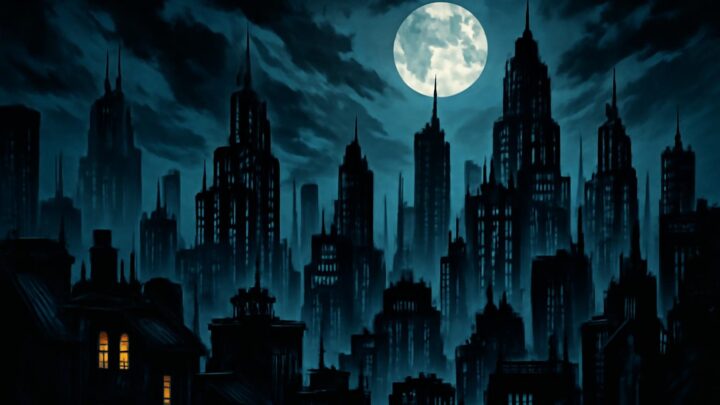
Stephanie Hans paints DIE, and the result is one of the most beautiful comics of its era. Her work is lush, textured, and cinematic, with a rich, moody palette that shifts from the warm melancholy of the “real world” to the saturated dread of the game. She handles both quiet emotional beats and sweeping fantasy vistas with equal command, and her painted approach gives the whole book a heavy, storybook weight that suits its themes perfectly. This is emphatically a comic to own on paper. As with Monstress, another painted Image epic, reading it only on a small screen means missing part of the point.
For tabletop players especially
If you’ve ever played Dungeons & Dragons or any tabletop RPG, DIE hits differently. Gillen weaves the language, mechanics, and culture of the hobby throughout — dice, classes, character sheets, the strange intimacy of a long-running campaign — and he clearly loves it enough to critique it honestly. (He even released an actual playable DIE tabletop RPG system alongside the comic, for readers who want to run their own game.) But you don’t need to know a d20 from a d6 to be moved by the story. The RPG framework is the vehicle; the destination is universal.
Content warning
DIE is a book for adults. Expect graphic fantasy violence, dark and disturbing themes including trauma, grief, self-harm, and addiction, and some strong language. It handles these subjects with care and seriousness rather than shock value, but this is not an all-ages fantasy — it’s a mature, sometimes bleak story aimed at grown readers.
Pros and cons
Pros
- Breathtaking painted art from Stephanie Hans
- A smart, emotionally devastating take on fantasy and nostalgia
- Complete in four volumes — no endless wait for a conclusion
- Essential reading for tabletop RPG fans
Cons
- Bleak and emotionally heavy; not comfort reading
- Dense with ideas — rewards attention over a casual skim
- Mature themes make it unsuitable for younger readers
How DIE compares to other fantasy comics
If you’re weighing DIE against other modern fantasy comics, here’s roughly where it sits. It’s more emotionally punishing than most, and more overtly about the act of storytelling itself.
| Book | Creators | Best for | Status | Approx. price |
|---|---|---|---|---|
| DIE, Vol. 1 | Gillen & Hans | Grown-up RPG tragedy | Complete (4 vols) | ~US$18 |
| Monstress, Vol. 1 | Liu & Takeda | Epic dark fantasy | Ongoing | ~US$17 |
| Saga, Vol. 1 | Vaughan & Staples | Space-fantasy family drama | Ongoing | ~US$10 |
For the wider field, see our guide to the best fantasy comics, our roundup of the best Image Comics where DIE is a standout, and our overall best graphic novels list.
Which edition should you buy?
Because the series is complete, you have a clear path from “sampling it” all the way to “owning the definitive collection.”
| Edition | Collects | Approx. price | Best for |
|---|---|---|---|
| Volume 1 paperback | Issues #1–5 | ~US$18 | Trying it out |
| Volumes 1–4 paperbacks | The full series | ~US$70 total | Reading it all |
| The Complete Edition (HC) | All four volumes | ~US$50 | Best value for the whole story |
If you already suspect this is your kind of book, the oversized hardcover Complete Edition gathers the entire story and shows off Hans’s painted art at scale — the best way to experience it. If you want to sample first, start with the Volume 1 paperback.
AmazonCheck price on AmazonThe verdict
DIE is one of the smartest and most emotionally ambitious fantasy comics of recent years — a book that uses the language of tabletop gaming to say something genuinely profound about growing up, growing old, and the stories we can’t let go of. Stephanie Hans’s art alone justifies the purchase, and the fact that the story is complete makes it an easy commitment. It’s a highlight of our best Image Comics list and a standout in our Indie & Image hub. For readers ready for something dark, beautiful, and deeply felt, it’s essential.
Frequently asked questions
Is DIE a finished series?
Yes. Unlike many ongoing comics, DIE tells a complete story across four collected volumes, so you can start Volume 1 knowing there’s a definite, satisfying ending waiting.
Do I need to play tabletop games to enjoy DIE?
Not at all. The story leans on RPG language and culture, and fans of games like Dungeons & Dragons will get an extra layer, but the emotional core — about growing up and revisiting your past — is universal.
Is DIE appropriate for teenagers?
It’s aimed at adults. There’s graphic fantasy violence and heavy themes including trauma, grief, and self-harm, handled seriously rather than gratuitously. We’d point younger readers toward gentler picks in our best fantasy comics guide first.
Is there a DIE tabletop RPG?
Yes. Kieron Gillen released a playable DIE tabletop role-playing game system alongside the comic, so readers can run their own games in the same world if they want to.
Want more painted fantasy epics? Read our Monstress review, or browse the whole Indie & Image hub.