Monstress, Vol. 1 Review: Gorgeous, Brutal, Essential
A review of Monstress, Vol. 1 — Marjorie Liu and Sana Takeda's Hugo-winning dark fantasy, one of the most beautiful books on any comics shelf.
 By Web Admin

If you want proof that comics can out-imagine any prestige fantasy series, read Monstress. Written by Marjorie Liu and painted by Sana Takeda, this Image Comics series debuted in 2015 and promptly swept the field — winning the Hugo Award for Best Graphic Story five years running and multiple Eisners. Volume 1, “Awakening,” collects the first six issues. It is dense, dark, and genuinely challenging, and it is also one of the most beautiful objects you can put on a shelf. Here’s our full review.
What is Monstress?
Set in an alternate, matriarchal 1900s inspired by early-twentieth-century Asia, Monstress follows Maika Halfwolf, a teenage survivor of a devastating war between humans and the Arcanics — a race of magical beings descended from ancient gods. Maika is hunted for her heritage and for something far more dangerous: a monstrous, hungry entity that lives inside her and whose power she does not fully control. Volume 1 is her journey to understand what she is, at enormous cost.
The story: myth, war, and trauma
This is not a gentle fantasy. Liu writes about war, slavery, and generational trauma with real weight, and the plot is dense with factions: the witch-nuns of the Cumaea who harvest Arcanics for magic, the cat-like Ancients, and the political machinery grinding toward a second war. The first volume asks a lot of you — there are many names, histories, and betrayals to track — but it trusts you to keep up, and the payoff is a world that feels genuinely vast and lived-in.
The themes
Beneath the sword-and-sorcery, Monstress is about surviving atrocity: what violence does to the people who live through it, how power is bought with other people’s bodies, and whether a person can be more than the worst thing inside them. Liu, a former lawyer and prose novelist, laces the fantasy with real moral weight, and Maika’s struggle for control over the Monstrum is as much psychological as supernatural.
The art: Sana Takeda’s painted pages
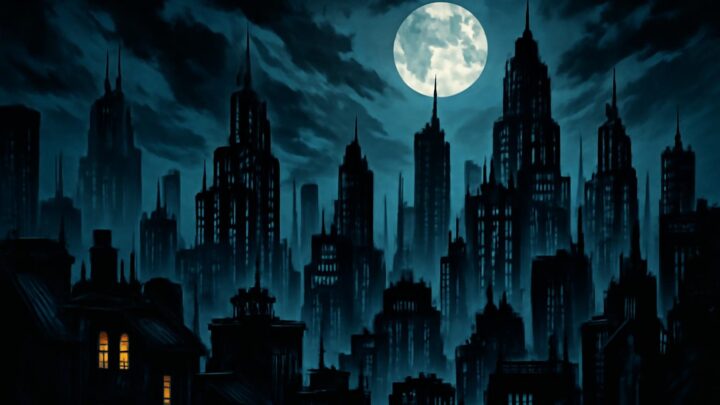
Sana Takeda’s artwork is the headline. Her style fuses Art Deco ornamentation, steampunk machinery, and manga expressiveness into fully painted pages that look like illuminated manuscripts. Every panel is crowded with detail; several splash pages could hang framed on a wall. This is the rare comic where buying the physical trade — printed large and on good paper — genuinely matters. If you read only digitally, you’re missing part of the point.
Meet the cast
- Maika Halfwolf — the fierce, wounded protagonist bound to something ancient.
- Kippa — a young fox-Arcanic whose kindness is the book’s beating heart.
- Master Ren — a two-tailed talking cat with his own agenda.
- The Monstrum — the hungry god-thing inside Maika.
Content warning
Like the best of its genre, Monstress earns its darkness. Expect graphic violence, body horror, and heavy themes including slavery and war atrocities. It’s for mature readers, and it is not a comfort read — but the horror is purposeful, never cheap.
Pros and cons
Pros
- Genuinely breathtaking, framable artwork
- Rich, original, non-Western fantasy worldbuilding
- Complex, morally grey female leads
- Multiple Hugo and Eisner wins
Cons
- Dense lore — a slow, demanding burn early on
- Graphic violence and body horror
- Not a casual first comic
How it compares to other dark fantasy
If you’ve read a lot of fantasy comics, Monstress most obviously invites comparison to The Sandman in ambition and to Berserk in tone, but it doesn’t really read like either. Where Sandman is episodic and mythological and Berserk is a relentless action tragedy, Monstress is a dense political epic told mostly through character and consequence. The closest touchstones outside comics are probably prestige fantasy novels — think N.K. Jemisin or Fonda Lee — rather than the sword-swinging pulp the cover might suggest. That literary density is why some readers bounce off the first issue and why those who stay become evangelists.
It’s also worth saying how rare the book’s perspective is. Mainstream fantasy still skews heavily Western and male; Monstress centers women, draws on Asian art and history, and treats its non-human characters as fully realised people. That alone would make it notable. That it’s also one of the best-drawn comics of its era is what makes it essential.
Is Monstress a good first comic?
For most people, no — and that’s fine. It’s a book to graduate to once you’re comfortable reading dense sequential art. If you’re just starting out, begin with our beginners guide or the Saga review, then come back for Monstress when you want something more ambitious. Fans of dark fantasy and video games like Bloodborne or shows like Arcane, however, can dive straight in. Horror readers should also see our best horror comics guide.
Which edition should you buy?
Because Takeda’s art benefits so much from scale, the format you choose matters more than usual.
| Edition | Collects | Approx. price | Best for |
|---|---|---|---|
| Volume 1 paperback | Issues #1–6 | ~US$17 | Trying it out |
| Hardcover editions | Two volumes each | ~US$35 | Showcasing the art |
| Compendium | Multiple volumes | ~US$60 | Best value binge |
The verdict
Monstress is a major achievement — the kind of book that expands your sense of what comics can look like and be about. It demands patience and a strong stomach, but readers who meet it halfway are rewarded with one of the finest fantasy epics in any medium. It’s a standout in our Indie & Image hub, sits comfortably on our best graphic novels list, and we recommend it without hesitation to anyone ready for it.
Frequently asked questions
How many volumes of Monstress are there?
There are eight collected volumes so far, with the series still ongoing. Volume 1 is the essential starting point.
Is Monstress manga?
No — it’s an American comic published by Image, though Sana Takeda’s art draws heavily on manga and Japanese illustration traditions.
Is Monstress good for beginners?
It’s better as a second or third read. The lore is dense; we’d start newer readers on something more accessible first, like our beginners picks.
Has Monstress won awards?
Yes — it won the Hugo Award for Best Graphic Story five consecutive years and multiple Eisner Awards, including for Sana Takeda’s art.
Explore more creator-owned gems in our Indie & Image hub, or see the all-time greats in our best graphic novels guide.