Magneto Reading Order: Where to Start
From Claremont classics to Testament and Krakoa.
 By Web Admin
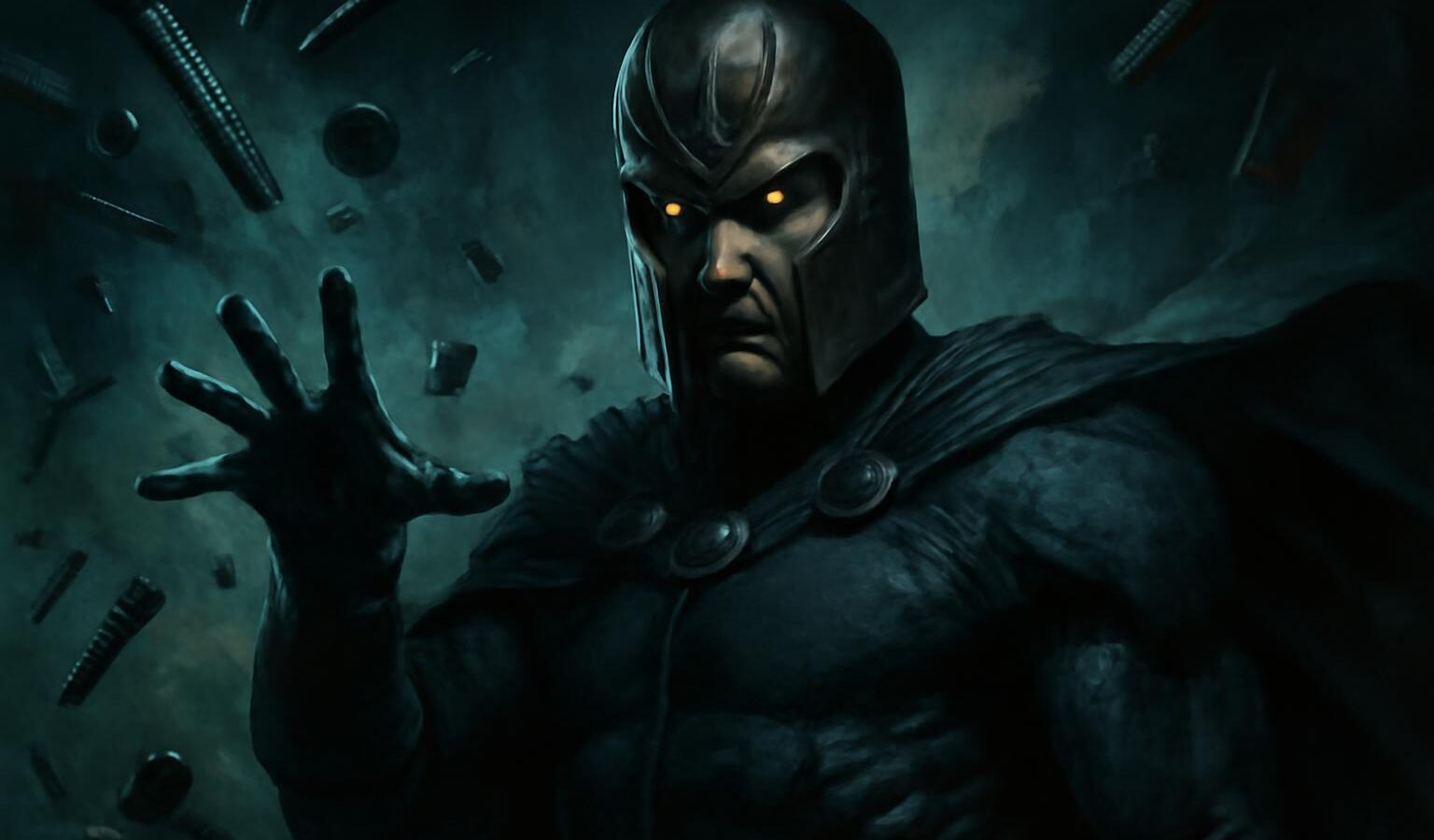
Magneto is comics’ great antagonist-who-isn’t — a Holocaust survivor turned mutant revolutionary whose “villainy” is really the refusal to let history repeat itself. Over six decades he has been Professor X’s enemy, his ally, his equal, and eventually a founding father of the mutant nation of Krakoa. Few characters have a richer arc, and few are harder to read in order, because Magneto rarely headlines his own book.
This Magneto reading order threads the essential stories together: the Claremont-era classics that gave him depth, the searing origin of Magneto: Testament, his 2014 solo series, and his central role in the Krakoa era. Here’s where to start and how to build the full picture.
Who is Magneto? The quick version
Max Eisenhardt — better known as Magneto — is a mutant with the power to generate and control magnetic fields, created by Stan Lee and Jack Kirby in The X-Men #1 (1963). What elevates him above a standard villain is his backstory: a Jewish survivor of Auschwitz who watched humanity’s capacity for genocide firsthand, and who is determined that mutants will never be the victims of the next Holocaust. His methods are extreme; his fear is legitimate. That tension is the whole character.
1. The Silver Age origins: X-Men #1 (1963)
Magneto debuts as the X-Men’s first villain in Lee and Kirby’s The X-Men #1 (1963). The early appearances are broad Silver Age villainy — worth reading for context, but not yet the nuanced figure he’d become. You can find these in the X-Men epic collections and Masterworks. For the wider team context, see our X-Men reading order.
2. The Claremont era begins (1975–1980s)
Everything changes when Chris Claremont takes over Uncanny X-Men. Across his legendary run, Magneto evolves from a cackling antagonist into a tragic, principled figure — his Holocaust past is established, his logic is given weight, and he even leads the X-Men and Xavier’s school for a stretch. This run is the foundation of the modern character and a cornerstone of any list of the best X-Men comics.
3. God Loves, Man Kills (1982)
The essential single volume. Claremont and Brent Anderson’s original graphic novel pits the X-Men and Magneto against a genocidal televangelist, and it’s here that Magneto’s argument — that humanity will always turn on mutants — feels most persuasive. It’s self-contained, gorgeously drawn, and the ideal place to start if you want the philosophy without decades of continuity. It later loosely inspired the film X2.
4. The trial and the New Mutants years (mid-1980s)
Claremont pushed the redemption arc further: Magneto stands trial for his crimes, is entrusted with Xavier’s school, and mentors the young New Mutants. This is the most morally complex Magneto material of the classic era, showing him genuinely trying — and struggling — to walk Xavier’s path. Recommended for readers who want the full arc rather than the greatest hits.
5. Magneto: Testament (2008)
Greg Pak and Carmine Di Giandomenico’s Magneto: Testament (2008) is the definitive origin — a harrowing, meticulously researched account of young Max’s survival during the Holocaust, told entirely without super-heroics. It’s one of the most powerful comics Marvel has ever published and reads as essential context for everything else. Handle with care; it’s heavy, unflinching historical fiction.
Content note: Testament depicts the Holocaust directly, including genocide and atrocity. It’s written for mature readers.
6. Magneto (2014) by Cullen Bunn
The best modern solo series. Cullen Bunn and Gabriel Hernandez Walta’s Magneto (2014–2015) follows a depowered, grimmer Magneto operating as a one-man war against threats to mutantkind — a noir-tinged, morally grey character study. It’s the rare book that puts Magneto front and center for an extended run and rewards readers who already know the character.
7. The Krakoa era: House of X (2019 onward)
Jonathan Hickman’s House of X / Powers of X (2019) reinvented the entire X-Men line — and Magneto is at its heart, standing beside Xavier as a co-founder of the sovereign mutant nation of Krakoa. It’s the culmination of his journey from villain to statesman, and it’s the current status quo. This is also a landmark on our list of the best comic book runs.
8. Where Magneto and Wolverine cross
Magneto’s story constantly intersects with the wider mutant cast. For the other defining X-Men solo journey — and plenty of shared history — see our Wolverine reading order, which runs parallel to much of Magneto’s arc. The two have fought as enemies and stood together as allies, and their contrasting philosophies (Magneto’s revolutionary conviction against Wolverine’s weary pragmatism) produce some of the sharpest character moments in the whole X-Men library. Readers who want the definitive team framing should also keep our best X-Men comics guide handy as a companion checklist.
Reading order at a glance
| Order | Story | Year | Creators | Priority |
|---|---|---|---|---|
| 1 | The X-Men #1 (debut) | 1963 | Lee / Kirby | Context |
| 2 | Uncanny X-Men (Claremont) | 1975–1991 | Claremont et al. | Essential |
| 3 | God Loves, Man Kills | 1982 | Claremont / Anderson | Essential |
| 4 | Magneto: Testament | 2008 | Pak / Di Giandomenico | Essential |
| 5 | Magneto (solo) | 2014–2015 | Bunn / Walta | Recommended |
| 6 | House of X / Powers of X | 2019 | Hickman | Essential |
Two ways to read Magneto
- Greatest hits: God Loves, Man Kills → Magneto: Testament → House of X / Powers of X. Three books, the whole character.
- Full arc: Silver Age debut → Claremont’s Uncanny → God Loves, Man Kills → the trial/New Mutants years → Testament → Bunn’s Magneto → Krakoa.
- Want the philosophy fast? Start with God Loves, Man Kills.
- Want the emotional origin? Start with Testament.
- Want the current status quo? Jump to House of X.
Where to buy and what to skip
The two must-owns are God Loves, Man Kills and Magneto: Testament — both are self-contained and available as single trades. From there, Hickman’s House of X / Powers of X collection is the gateway to the modern era. The Silver Age debut is worth reading for context but is easy to skip if you’re short on time.
AmazonCheck price on AmazonFor the full mutant picture, browse the Marvel hub or dive into our complete X-Men reading order.
Frequently asked questions
Where should I start reading Magneto?
Start with X-Men: God Loves, Man Kills (1982) — it’s self-contained and captures Magneto’s worldview perfectly. For his origin, read Magneto: Testament (2008), the definitive account of his survival of the Holocaust.
Is Magneto a hero or a villain?
Both, over time. He began as the X-Men’s first villain but evolved into a tragic anti-hero and, in the Krakoa era, a co-founder of the mutant nation. His extremism comes from a genuine fear of anti-mutant genocide.
Does Magneto have his own comic series?
He mostly appears in team books, but Cullen Bunn’s Magneto (2014–2015) is an excellent solo series, and Magneto: Testament is a standalone origin miniseries.
Do I need to read the X-Men books to follow Magneto?
The self-contained books (God Loves, Man Kills, Testament) need no prior reading. To follow his full arc, our X-Men reading order provides the surrounding context.