Bitch Planet Review: Feminist Sci-Fi Rebellion
Kelly Sue DeConnick's fierce feminist sci-fi about \"non-compliant\" women.
 By Web Admin
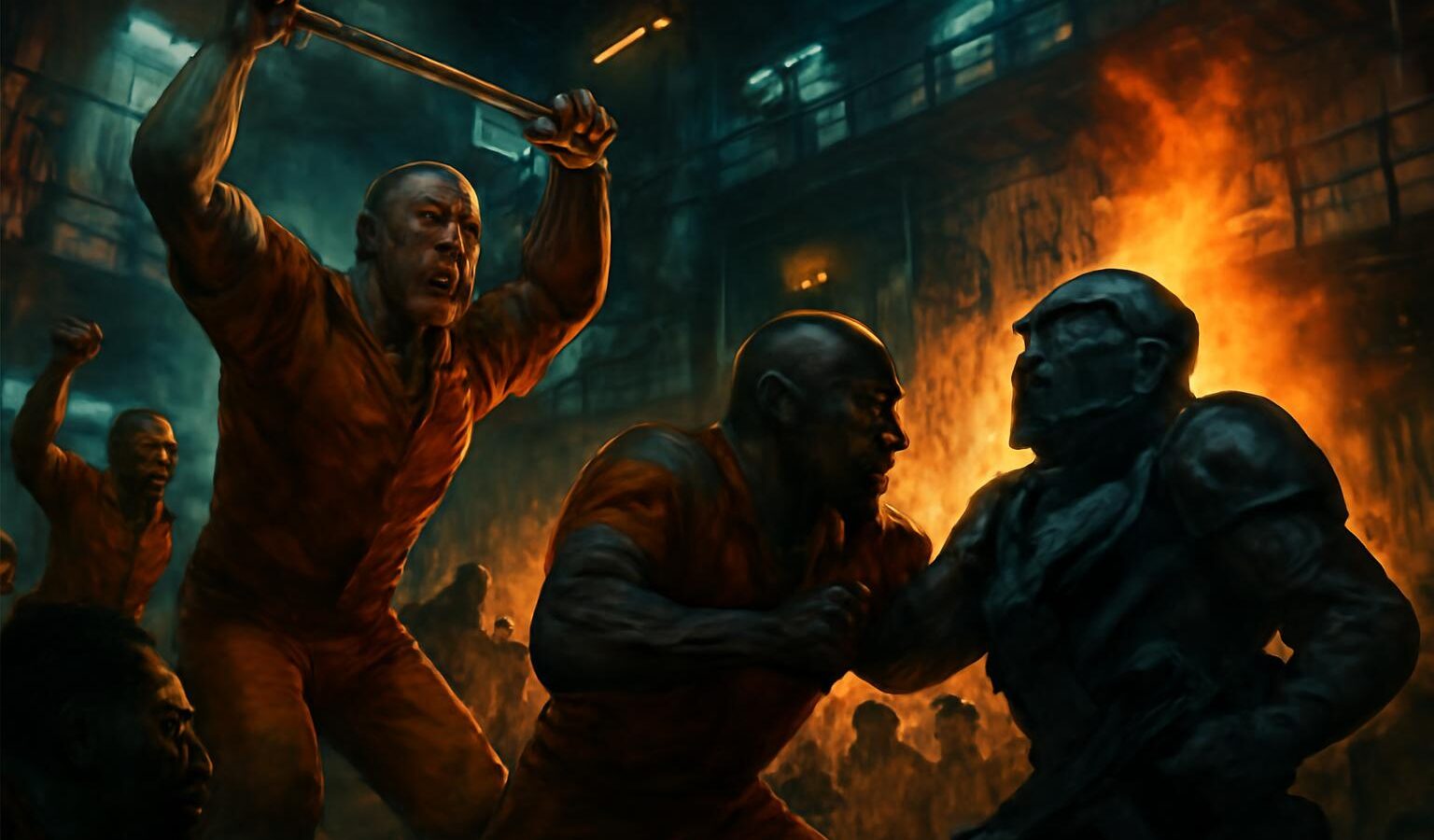
Take the lurid, grimy energy of a 1970s women-in-prison exploitation flick, then flip it into a razor-sharp feminist satire — and you have Bitch Planet. Created by writer Kelly Sue DeConnick and artist Valentine De Landro, this Image Comics series launched in 2014 and became a lightning rod: fiercely political, deliberately provocative, and unapologetically angry. It imagines a future where women deemed “non-compliant” are shipped off-world to a prison planet, and then it asks what those women might do if they fought back. This is our full review of Bitch Planet — what it is, what it’s doing, and who it’s for.
Straight up: the title alone tells you this is a mature book. It contains nudity, strong language, and violence, and it’s built to make you uncomfortable. More on that below.
What is Bitch Planet?
Bitch Planet is a creator-owned science-fiction series written by Kelly Sue DeConnick (Captain Marvel, Pretty Deadly) and drawn by Valentine De Landro, published by Image Comics starting in 2014. It’s set in a patriarchal near-future where a governing body called the Fathers enforces “compliance.” Women who step out of line — who are too loud, too fat, too angry, too anything the men in charge dislike — are labeled “Non-Compliant” and exiled to an off-world penal colony officially named the Auxiliary Compliance Outpost, and unofficially known as Bitch Planet.
Volume 1, “Extraordinary Machine,” collects the first five issues. It introduces the prison, its inmates, and a scheme by the authorities to use the prisoners in a brutal, televised blood-sport called Megaton as a propaganda spectacle — a scheme the women intend to turn to their own ends.
The story: an exploitation riff with a brain
DeConnick openly borrows the visual language of 1970s exploitation cinema — the sleazy prison-movie posters, the lurid titles — and weaponizes it. What looks like pulp is actually a Trojan horse for pointed satire about misogyny, body policing, racism, and the way society punishes women for non-compliance. The genius of the book is that it uses the male gaze against itself: the trappings that would titillate in a real exploitation film are recontextualized to indict the very systems that produce them.
The plot follows Kamau Kogo, a former athlete recruited to lead a team of prisoners in Megaton, and the ensemble of inmates around her. As the story unfolds, it becomes clear the game is a setup — and the women have plans of their own.
The themes: compliance, control, and resistance
At its heart, Bitch Planet is about who gets to define “acceptable” womanhood and what happens to those who refuse. It tackles body image, racism, the prison-industrial complex, and the everyday policing of women’s behavior, all through the lens of heightened dystopian satire. The recurring “Non-Compliant” branding — which real readers embraced to the point of getting “NC” tattoos — became a genuine cultural rallying cry. Few comics have connected with their audience quite so directly.
The art: Valentine De Landro’s grit
Valentine De Landro’s artwork gives the book a deliberately raw, textured look that recalls the grindhouse films it’s riffing on, while keeping its diverse cast of women distinct and fully human. The character designs pointedly reject the airbrushed sameness of a lot of mainstream comics — the women come in every size, shape, and shade, which is itself part of the book’s argument. The design work, including faux in-world advertisements between chapters, extends the satire off the page and into the reading experience.
Meet the cast
- Kamau Kogo — a former sports star pressed into leading the prison Megaton team.
- Penny Rolle — a defiantly self-possessed inmate whose spotlight issue is a series highlight.
- Meiko Maki — a young engineer whose fate raises the stakes for the whole team.
- The Fathers — the faceless patriarchal authority running the whole system.
Content warning
This is very much an adult book. Bitch Planet contains nudity, sexual content, graphic violence, strong language, and depictions of misogynistic and racist violence. All of it is in service of the satire rather than there to titillate, but the book is designed to provoke and to make you sit with discomfort. It is not for younger readers.
Pros and cons
Pros
- Sharp, genuinely subversive feminist satire
- A refreshingly diverse, fully realized cast
- Clever use of exploitation-film tropes and faux ads
- Penny Rolle’s standalone issue is a standout
Cons
- Deliberately provocative and confrontational
- Mature content throughout — nudity, violence, language
- The series is currently incomplete
How Bitch Planet compares to other feminist sci-fi comics
If you’re drawn to comics with a political edge and a science-fiction setting, here’s how Bitch Planet stacks up.
| Book | Creators | Hook | Approx. price (Vol. 1) |
|---|---|---|---|
| Bitch Planet | DeConnick & De Landro | Feminist prison-planet satire | ~US$10 |
| Saga | Vaughan & Staples | Space-opera family drama | ~US$10 |
| Y: The Last Man | Vaughan & Guerra | Last man on Earth | ~US$15 |
Readers who connect with its politics should explore our roundup of the best sci-fi graphic novels, and DeConnick fans will want to read up on the creator herself in our guide to the best comic book writers.
Is the series finished?
Worth knowing before you dive in: Bitch Planet‘s main story is currently incomplete. The first volume and subsequent issues, plus a one-shot anthology special (Triple Feature), stand as a powerful, largely self-contained opening act, but the full saga has not yet been concluded. What exists is well worth reading on its own terms — just go in aware that the last chapters are still awaited. For more bold, boundary-pushing creator-owned work, see the best Image Comics.
Which edition should you buy?
There are a couple of good ways in.
| Edition | Collects | Approx. price | Best for |
|---|---|---|---|
| Vol. 1: Extraordinary Machine | Issues #1–5 | ~US$10 | Trying it out |
| Vol. 2: President Bitch | Issues #6–10 | ~US$15 | Continuing the story |
| Triple Feature | Anthology one-shots | ~US$15 | Expanding the world |
The verdict
Bitch Planet is one of the most fearless comics of its decade — a book that dresses up as trash to smuggle in genuinely radical ideas, and that connected with readers on a level few comics ever do. It’s confrontational by design and won’t be for everyone, and its incomplete status is a real caveat. But for adult readers who want science fiction with teeth and a point of view, it’s essential reading and a landmark of feminist comics. Find more like it among the best sci-fi graphic novels and across the Indie & Image hub.
Frequently asked questions
Is Bitch Planet finished?
Not yet. Two main volumes and an anthology special have been published, forming a strong, largely self-contained opening, but the complete story has not been concluded.
Is Bitch Planet appropriate for younger readers?
No. It’s an adult book with nudity, graphic violence, and strong language, all in service of its satire. We’d point younger readers to gentler picks in our best Image Comics guide.
Do I need to like sci-fi to enjoy it?
Not especially. The science-fiction setting is a vehicle for satire about gender, race, and power. If you enjoy sharp, political storytelling, you’ll find plenty here even if space prisons aren’t usually your thing.
Who is Kelly Sue DeConnick?
She’s an acclaimed writer known for Captain Marvel, Pretty Deadly, and Bitch Planet, and one of the most influential voices in modern comics — read more in our guide to the best comic book writers.
Next, explore more genre-bending stories in our best sci-fi graphic novels, or browse the whole Indie & Image hub.