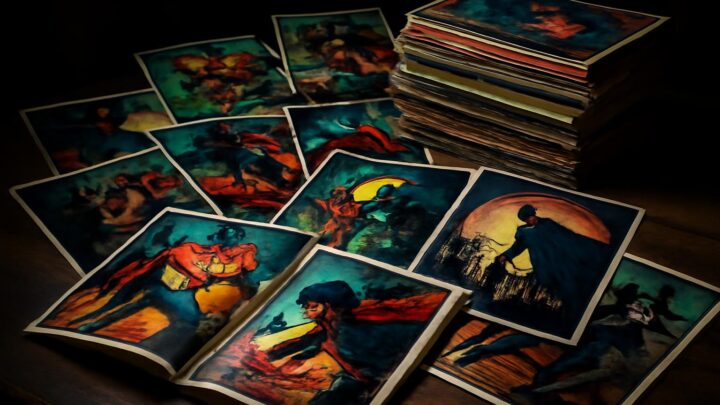
The Best Comics of the 2000s
Y: The Last Man, Scott Pilgrim, All-Star Superman — the 2000s' best.
 By Web Admin

The 2000s were a quietly transformational decade for comics. The medium’s early-nineties speculator bubble had burst, and out of the wreckage came a wave of confident, creator-driven work: bookstore-friendly graphic novels, ongoing series with real endings in mind, and superhero runs that treated the genre as literature rather than product. It was the decade the “graphic novel” section became a fixture at Barnes & Noble, and the decade that produced a startling number of all-time classics.
This is our guide to the best comics of the 2000s — the books that defined the decade and still get pressed into new readers’ hands today. We’ve spanned indie epics, webcomic phenomena, and the era’s very best superhero storytelling, with rough US prices and content notes so you know what you’re getting. If you’re building a shelf of modern classics, start here.
What made the 2000s special?
Two shifts defined the decade. First, the rise of the collected edition: publishers realized that trade paperbacks and “graphic novels” sold steadily in bookstores long after single issues left the rack, which encouraged writers to plot for the long haul with definite endings. Second, the maturing of creator-owned publishing — Image Comics, Oni Press, and DC’s Vertigo imprint gave authors ownership and freedom, and readers rewarded them. The result was a decade unusually rich in complete, self-contained stories you can hand someone whole.
Y: The Last Man (2002–2008)
Written by Brian K. Vaughan and drawn by Pia Guerra, Y: The Last Man imagines a plague that instantly kills every mammal with a Y chromosome — except an amateur escape artist named Yorick Brown and his monkey, Ampersand. What follows is a 60-issue road trip across a world remade, equal parts thriller, character study, and thought experiment. It won three Eisner Awards and remains one of the best-plotted long-form comics ever. Collected in five deluxe hardcovers (about US$30 each) or ten trades. A near-perfect on-ramp to the decade.
Scott Pilgrim (2004–2010)
Bryan Lee O’Malley’s Scott Pilgrim is the decade’s coolest comic — a black-and-white manga-influenced series about a 23-year-old Torontonian slacker who must defeat his new girlfriend’s seven evil exes in video-game-style battles. Underneath the fizzing pop-culture surface is a genuinely sharp story about growing up and taking responsibility. Six volumes (color editions run about US$18–20 each), later adapted into Edgar Wright’s 2010 film and a 2023 Netflix anime. Effortlessly rereadable.
All-Star Superman (2005–2008)
Grant Morrison and Frank Quitely’s All-Star Superman is, for many readers, the best Superman story ever told. Freed from continuity, it follows a dying Superman as he sets out to complete twelve final labors — and in doing so distills everything decent and hopeful about the character into twelve gorgeous issues. It won the Eisner for Best New Series. Collected in one volume around US$25–30. If you think you don’t care about Superman, this is the book that changes your mind. For a different but equally beloved take, don’t miss our Superman: Red Son review.
Runaways (2003–onward)
Brian K. Vaughan (again) and Adrian Alphona launched Runaways in 2003 with a brilliant hook: a group of teenagers discovers their parents are secretly a cabal of supervillains, and they run. It’s one of the freshest superhero concepts Marvel produced all decade, funny and heartfelt and genuinely surprising. The first arcs are collected in affordable digest and hardcover editions (about US$15–35). We cover it in depth in our Runaways review.
Vertigo’s finest: Ex Machina & Fables
Rounding out Vaughan’s remarkable decade, Ex Machina (2004–2010, with artist Tony Harris) follows Mitchell Hundred, a former superhero who becomes mayor of New York City after 9/11. It’s a smart political drama with a sci-fi spine, blending real municipal governance with the fantastical. Ten volumes or five deluxe hardcovers (about US$25–30 each). A must for readers who like their comics cerebral.
Bill Willingham’s Fables (2002–2015) imagines fairy-tale characters living in secret in modern New York after being exiled from their homelands by a mysterious Adversary. It’s part murder mystery, part war epic, part soap opera, and it ran for 150 issues on Vertigo. The early volumes (about US$18 each, or larger deluxe editions) are the strongest, and “Legends in Exile” is a perfect opening act. It’s a cornerstone of our best Vertigo comics guide.
Image & indie landmarks: The Walking Dead, Daytripper, Criminal & Blankets
Robert Kirkman and Tony Moore (later Charlie Adlard) launched The Walking Dead at Image in 2003, and it became one of the best-selling comics of the century — the black-and-white zombie survival saga that spawned the record-breaking TV franchise. The comic is bleaker and more relentless than the show, and its early volumes (about US$15 each, or big compendiums around US$60) are gripping. Content warning: extreme, unremitting violence and horror.
Fábio Moon and Gabriel Bá’s Daytripper (a 2010 Vertigo miniseries, collected around US$20) is a quietly profound meditation on life and death, told through the many possible endings of one man’s story — one of the most beautiful comics of the era. Ed Brubaker and Sean Phillips’ Criminal (2006–onward) revived hard-boiled crime comics with a series of interlocking noir tales; the early volumes (about US$17 each) are a masterclass, and a highlight of our Indie & Image hub.
And Craig Thompson’s Blankets (2003) is a landmark of autobiographical comics — a nearly 600-page graphic memoir about a first love and a religious upbringing in rural Wisconsin. Tender, gorgeously drawn, and hugely influential on the “literary graphic novel” wave, it helped prove the form could sit comfortably on a serious bookshelf. About US$25 for the paperback. A high point of the decade’s non-superhero output.
At a glance: the decade’s essentials
| Title | Creators | Genre | Format | Approx. price |
|---|---|---|---|---|
| Y: The Last Man | Vaughan & Guerra | Post-apocalyptic | 5 deluxe HCs | ~US$30/vol |
| Scott Pilgrim | Bryan Lee O’Malley | Coming-of-age | 6 vols | ~US$19/vol |
| All-Star Superman | Morrison & Quitely | Superhero | 1 vol | ~US$28 |
| Runaways | Vaughan & Alphona | Teen superhero | Digests/HCs | ~US$15+ |
| Fables | Bill Willingham | Dark fantasy | Trades/deluxe | ~US$18/vol |
| Daytripper | Moon & Bá | Literary | 1 vol | ~US$20 |
Where to start with the 2000s
If you want one book that captures the decade, start with Y: The Last Man or All-Star Superman. If you want something lighter and instantly fun, Scott Pilgrim is the pick. Here’s a simple reading path by taste:
- Prestige-TV binge feeling: Y: The Last Man, then Ex Machina.
- Pure fun: Scott Pilgrim, then Runaways.
- You want to cry a little: Blankets, then Daytripper.
- Superhero done right: All-Star Superman.
- Crime and dread: Criminal, then The Walking Dead.
Many of these titles anchor our broader best graphic novels list, and the superhero and creator-owned runs feature heavily in our guide to the best comic book runs of all time.
Our top pick: for a single book that sums up why the 2000s were so good, we’d hand you Y: The Last Man — complete, brilliantly plotted, and endlessly rewarding. If you’d rather smile the whole way through, grab Scott Pilgrim instead. You genuinely can’t go wrong with either.
AmazonCheck price on AmazonOnce you’ve worked through these, jump forward a decade with our best comics of the 2010s guide.
Pros and cons of collecting 2000s comics
Pros
- An unusually high hit-rate of complete, self-contained classics
- Most titles are finished, so no waiting on ongoing series
- Widely reprinted — deluxe and compendium editions are easy to find
- The decade bridges indie and mainstream beautifully
Cons
- A few titles (The Walking Dead) are extremely violent
- Some out-of-print single issues can be pricey for collectors
- So many great books that a full shelf adds up fast
Frequently asked questions
What is the single best comic of the 2000s?
It’s a close call, but Y: The Last Man and All-Star Superman top most critics’ lists. Y is the best long-form series of the decade; All-Star Superman is arguably the best single-volume superhero story ever made.
Are these comics good for beginners?
Very much so. Scott Pilgrim, Runaways, and All-Star Superman are especially welcoming to new readers. Blankets and Daytripper are perfect for people who don’t usually read comics at all.
Which 2000s comics have definite endings?
Y: The Last Man, Scott Pilgrim, Ex Machina, Fables, All-Star Superman, Daytripper, and Blankets are all complete, self-contained stories — one of the reasons the decade is so satisfying to collect.
Are any of these appropriate for kids?
Runaways and Scott Pilgrim are teen-friendly. The Walking Dead, Criminal, and Y: The Last Man are firmly for mature readers due to violence and adult themes.
Keep exploring with our Runaways review, our Superman: Red Son review, or the definitive best comic book runs guide.