Spider-Man Reading Order: Where to Start
Skip 60 years of continuity — start Spider-Man the smart way.
 By Web Admin
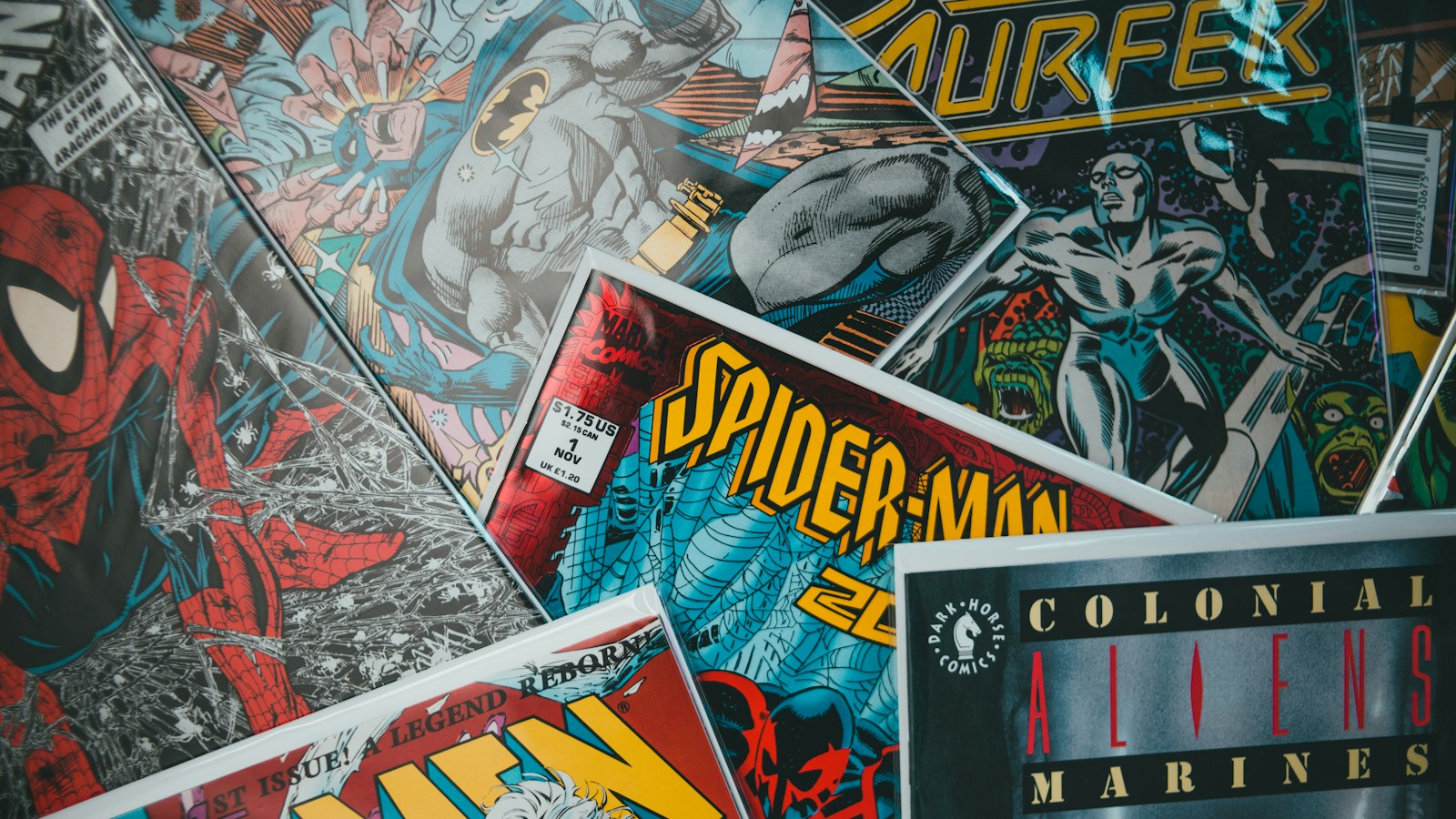
Spider-Man has been swinging through comics since 1962, and that is exactly the problem. More than sixty years of continuity, a dozen relaunches, three separate universes, and a cast of characters who have died and returned more than once make “where do I start?” a genuinely hard question. The good news: you do not have to read it all, and you absolutely should not try. There are a handful of clean jumping-on points that give you the best of the character without a spreadsheet.
This guide lays out a Spider-Man reading order in sensible stages. You can start at the very beginning with the classic Lee and Ditko era, or skip straight to a modern on-ramp built for new readers. Either way, we will get you to the great stuff fast — and tell you honestly what is worth your money.
First, decide which Peter Parker you want
There are really three doorways into Spider-Man, and picking the right one saves you a lot of confusion:
- The classic origin (1960s): Start with Stan Lee and Steve Ditko’s original run. Charming, foundational, and a little dated — best for readers who want the real history.
- The modern on-ramp (2000s): Begin with Ultimate Spider-Man by Brian Michael Bendis and Mark Bagley. It reboots Peter’s story in a self-contained universe with no homework required. This is what we hand most new readers.
- The next generation: Jump in with Miles Morales, the Spider-Man who anchors Into the Spider-Verse. Fresh, contemporary, and beginner-friendly.
If you are still unsure, our Marvel reading order for beginners puts Spider-Man in the wider context of the Marvel Universe.
Stage 1: The origin (Amazing Fantasy #15 and beyond)
Spider-Man debuted in Amazing Fantasy #15 (1962), the single issue where a bookish teenager named Peter Parker is bitten by a radioactive spider, loses his Uncle Ben, and learns that with great power comes great responsibility. It is one of the most important eight-page stories in comics history. From there, Lee and Ditko launched The Amazing Spider-Man ongoing series, introducing the Green Goblin, Doctor Octopus, and most of Peter’s iconic rogues.
You do not need the fragile original issues — collections like Marvel Masterworks: The Amazing Spider-Man or the cheaper black-and-white Essential Spider-Man and Epic Collection lines gather these stories affordably. Steve Ditko drew the first 38 issues; John Romita Sr. then took over and defined the more polished, romantic look many fans picture first.
Stage 2: The classic arcs everyone should read
Once you have the origin, a few landmark stories stand above the rest. These are the ones referenced constantly in adaptations and by other comics:
- The Night Gwen Stacy Died (1973): Amazing Spider-Man #121–122 by Gerry Conway and Gil Kane. The tragedy that ended the Silver Age and still defines the character’s stakes.
- Kraven’s Last Hunt (1987): J.M. DeMatteis and Mike Zeck’s dark, poetic masterpiece, collected in a single volume. Widely regarded as the greatest Spider-Man story ever told.
- The Death of Jean DeWolff (1985): Peter David’s tense, mature crime story.
Of these, Kraven’s Last Hunt is the essential one. It works as a standalone graphic novel even if you have read nothing else, and it belongs on any list of the best Spider-Man comics.
Stage 3: The modern on-ramp — Ultimate Spider-Man
Here is the shortcut we recommend most. In 2000, Marvel launched a separate line to re-tell its heroes for new readers, and Ultimate Spider-Man by Brian Michael Bendis and Mark Bagley is its crown jewel. It retells Peter’s origin in a modern setting and runs for over 150 issues of tight, character-driven storytelling. Because it lives in its own continuity, you need zero prior reading — this is the single cleanest place to begin in all of Spider-Man.
The run is collected in oversized Ultimate Collection paperbacks (each gathering roughly a dozen issues) and in Ultimate Spider-Man Omnibus hardcovers for readers who want it all in one brick. Start with Book 1 and keep going as far as you like — it never demands other titles.
AmazonCheck price on AmazonStage 4: Modern main-continuity runs
Ready to read the “real” Peter Parker in the main Marvel Universe? These modern runs are accessible without deep back-catalog knowledge:
- Ultimate Spider-Man is not enough? Try J. Michael Straczynski’s run (2001–2007): A strong, emotional modern take collected in Amazing Spider-Man Ultimate Collection volumes.
- Superior Spider-Man (2013): Dan Slott’s bold, controversial experiment where Doctor Octopus takes over Peter’s body and tries to be a “better” Spider-Man. Read Slott’s earlier Big Time arc first for full impact, but it mostly stands alone.
- Spider-Man by Nick Spencer (2018): A back-to-basics run that many fans consider the best modern Peter Parker.
Stage 5: Spider-Verse and Miles Morales
The Spider-Verse event (2014) by Dan Slott and Olivier Coipel gathers Spider-people from across the multiverse and is the basis for the beloved animated films. It reads well as a self-contained epic. From there, the obvious next step is Miles Morales, who first appeared in Ultimate Comics: Spider-Man (2011) and now headlines his own ongoing series. Miles is arguably the most beginner-friendly Spider-Man of all — start with Miles Morales: Spider-Man, Vol. 1 and you are set.
Reading order at a glance
| Step | Title | Collects | Best for |
|---|---|---|---|
| 1 | Amazing Fantasy #15 / Amazing Spider-Man (1963) | Marvel Masterworks or Epic Collection vol. 1 | Origin purists |
| 2 | Kraven’s Last Hunt (1987) | One collected trade | Best single story |
| 3 | Ultimate Spider-Man (2000) | Ultimate Collection Book 1+ | New readers |
| 4 | Superior Spider-Man (2013) | Superior Spider-Man vol. 1 | Bold modern take |
| 5 | Spider-Verse (2014) | Spider-Verse trade | Multiverse fans |
| 6 | Miles Morales: Spider-Man (2018) | Vol. 1 | Contemporary jumping-on |
For the wider Marvel picture, pair this with our Marvel reading order for beginners, or browse everything web-headed in the Marvel hub.
What you can safely skip
A few notorious stretches confuse new readers, and you lose nothing by ignoring them at first. The 1990s Clone Saga is a famously convoluted mess — approach only once you are a committed fan. One More Day (2007) is the divisive story that rewrote Peter’s marriage and is best encountered with context. And the endless line-wide crossovers Spider-Man gets pulled into (the various Secret Wars, Civil War tie-ins) are optional detours, not required reading.
Where to buy and how to save
Spider-Man is one of the best-collected characters in comics, which means value hunters have great options. The Epic Collection line reprints big chunks of classic issues cheaply. Individual graphic novels like Kraven’s Last Hunt run around US$15–20. And the Ultimate Spider-Man omnibuses, while pricey up front, deliver an enormous page count per dollar. Libraries and secondhand shops are your friend here too.
AmazonCheck price on AmazonFrequently asked questions
What is the best Spider-Man comic to start with?
For most new readers, Ultimate Spider-Man by Brian Michael Bendis. It retells the origin in its own continuity, so there is no homework, and the storytelling holds up beautifully. Origin purists should instead start with the Lee and Ditko run reprinted in Marvel Masterworks or Epic Collection volumes.
Do I need to read Spider-Man in order?
Not strictly. Many of the best stories — Kraven’s Last Hunt, Spider-Verse — read as standalones. The main reason to follow an order is to watch relationships and status-quo changes build over time, which is why we suggest starting a single continuity rather than jumping between eras.
Is Ultimate Spider-Man separate from the main comics?
Yes. It is a self-contained reboot in the “Ultimate” universe, which is exactly why it works so well as a beginner on-ramp. You can read all 150-plus issues without ever touching the main Marvel continuity.
Where does Miles Morales fit in?
Miles debuted in the Ultimate universe in 2011 and later moved into the main Marvel Universe. You can start with his solo series cold — no prior Spider-Man reading required — which makes him one of the friendliest entry points of all.
Next, dig into the definitive stories in our best Spider-Man comics guide, or plan your wider Marvel journey with the Marvel reading order for beginners.