Green Arrow Reading Order: Where to Start
From Grell's Longbow Hunters to the modern runs.
 By Web Admin

Oliver Queen has been shooting trick arrows since 1941, but for decades he was a second-string Batman knock-off with a goatee and a quiver of boxing-glove arrows. Then, in 1987, one book changed everything and turned Green Arrow into one of DC’s most interesting street-level heroes. If you have arrived here from the Arrow TV show, or from his scene-stealing turns in the Justice League, this guide will get you to the great stuff without decades of homework.
This is the Green Arrow reading order we actually hand to friends. It is not a complete continuity map, and it does not pretend to be. Green Arrow’s real appeal is that a handful of self-contained runs carry almost all of his best material, so you can start with one great book and let it pull you deeper. Read these in order and you will understand who Ollie is, why the goatee matters, and where to go next.
The books to buy, in reading order
These are the collected editions that cover the path below, in the order to read them.
| Pick | Best for | Why | Price | Buy |
|---|---|---|---|---|
| Green Arrow: The Longbow Hunters | Start here |
| $97.00as of Nov 12, 2026 4:12 pm UTC | View on Amazon |
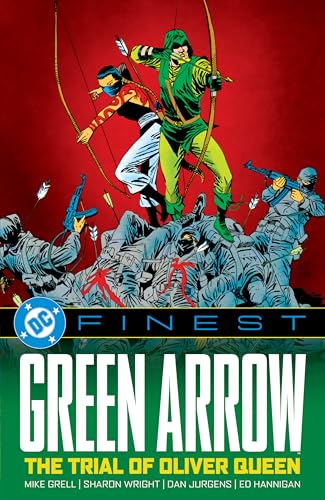
| DC Finest: Green Arrow: The Trial of Oliver Queen | Then: Grell's ongoing run |
| $27.16as of Nov 12, 2026 4:12 pm UTC | View on Amazon |
| Green Arrow: Archer's Quest Omnibus Vol. 1 | Then: Quiver |
| $84.85as of Nov 12, 2026 4:12 pm UTC | View on Amazon |
| Green Arrow: Year One | Then: the definitive origin |
| $8.99as of Nov 12, 2026 4:12 pm UTC | View on Amazon |
| Green Arrow Vol. 1: The Death and Life of Oliver Queen | Then: the Rebirth era |
| $11.49as of Nov 12, 2026 4:12 pm UTC | View on Amazon |


Prices and availability change; check Amazon for today’s price. As an Amazon Associate we earn from qualifying purchases.

The book that made Green Arrow matter. Mike Grell's 1987 prestige mini-series reinvents Oliver Queen as a grounded…
Check price on Amazon$97.00as of Nov 12, 2026 4:12 pm UTCOur take: The book that made Green Arrow matter. Mike Grell's 1987 prestige mini-series reinvents Oliver Queen as a grounded urban hunter and is completely self-contained. Collects the three-issue mini plus context.
First, the good news: you don't need decades of continuity
The biggest myth about a legacy character like Green Arrow is that you have to "catch up" before you can enjoy him. You don't. Oliver Queen's reputation rests almost entirely on a few discrete eras: Mike Grell's grounded 1980s-90s run, Kevin Smith's fan-favorite revival, Andy Diggle's tight origin, and the modern Rebirth relaunch. Each was designed as a jumping-on point.
Comics also periodically reset their timelines, which helps newcomers. DC's 2011 New 52 and 2016 Rebirth relaunches both restarted Green Arrow with a fresh #1. So when a longtime fan insists you have to read everything first, smile and ignore them. Start with a great book and let it do the work. If you want the wider view first, our best superhero comics guide is a good companion, and the DC hub collects everything else.
Reading order at a glance
| Stage | Book / run | Creators | Year | Why |
|---|---|---|---|---|
| 1 | The Longbow Hunters | Mike Grell | 1987 | The reinvention; start here |
| 2 | Green Arrow: The Hunt (Grell run) | Mike Grell | 1988-93 | The grounded ongoing |
| 3 | Quiver | Kevin Smith, Phil Hester | 2001 | Ollie returns from the dead |
| 4 | Green Arrow: Year One | Andy Diggle, Jock | 2007 | The definitive modern origin |
| 5 | Green Arrow (Rebirth) | Benjamin Percy | 2016-19 | The best modern jumping-on |
Stage 1: The reinvention — The Longbow Hunters (1987)
Start with Green Arrow: The Longbow Hunters by Mike Grell. Published in 1987 as a three-issue prestige mini-series, it is the book that dragged Oliver Queen out of Batman's shadow and made him his own man. Grell strips away the trick arrows and the super-heroics and relocates Ollie to Seattle as an aging, grounded urban hunter grappling with mortality, violence, and his relationship with Black Canary.
Why start here? Because it assumes you know nothing, it is genuinely excellent, and everything that follows reads better once you have it in your head. It is darker and more adult than the goofy Silver Age Green Arrow, and it set the template — a working-class, politically outspoken archer — that every good version since has followed. It is short, self-contained, and it treats you like a grown-up.
Stage 2: The grounded ongoing — Grell's Green Arrow run
If The Longbow Hunters clicks, roll straight into Grell's ongoing Green Arrow series, which ran from 1988 to 1993 (roughly issues #1-80, with Grell writing the first stretch). This is Green Arrow as a mature-readers crime and espionage book: no costumed super-villains, just Ollie as a hunter navigating drug cartels, political assassins, and his own conscience across Seattle and beyond.
The run is collected across several trade paperbacks, beginning with Green Arrow: Hunters Moon. It is the longest sustained "street-level" take on the character and the clearest expression of who Oliver Queen is when you take away the superhero trappings. If you loved the tone of the Arrow pilot, this is the comic that inspired it.
Stage 3: The resurrection — Kevin Smith's Quiver (2001)
Ollie died in the 1990s (comics being comics), and filmmaker Kevin Smith brought him back in Green Arrow: Quiver (2001), with art by Phil Hester. It is the fan-favorite revival that returned the classic, wisecracking Oliver Queen to the DC Universe and kicked off a popular ongoing series. Smith writes Ollie with warmth and humor, and the mystery of exactly how he came back is a genuine page-turner that pulls in Batman, Superman, and the wider DC world.
Read Quiver after Grell because it rewards recognition — you will appreciate the resurrection far more if you understand the man being resurrected. Follow it with Sounds of Violence if you want more of Smith's run before moving on.
Stage 4: The definitive origin — Green Arrow: Year One (2007)
Now read Green Arrow: Year One (2007) by Andy Diggle and Jock. This is the tight, modern retelling of how a spoiled billionaire playboy is stranded on a deserted island and reinvents himself as a survivor and an archer. Jock's kinetic, gritty art is a perfect match for Diggle's lean adventure script, and the whole thing is a self-contained six-issue story you can read in an afternoon.
If you came here from the TV show, this is the single book that most directly informed its premise. It is also a superb standalone gift for anyone who likes a good survival-and-transformation story, no prior Green Arrow knowledge required.
Stage 5: The modern era — Green Arrow (Rebirth, 2016)
For the best current jumping-on point, go to Benjamin Percy's Green Arrow, launched in DC's 2016 Rebirth relaunch. Percy reunites Ollie with Black Canary, restores the social-justice edge that defines the best version of the character, and tells a modern, accessible superhero story built for new readers. Because it launched a fresh #1, you can start here cold if the older art styles are not for you.
The run is collected in trades beginning with Green Arrow, Vol. 1: The Death and Life of Oliver Queen. It is the most beginner-friendly Ollie on the shelf right now and a natural bridge into his team work with the wider DC roster.
Stage 6: See him in the team books
Oliver Queen has always been at his best bouncing off other heroes, so once you have the solo essentials, watch him in context:
- Green Lantern/Green Arrow by Denny O'Neil and Neal Adams (1970s) — the legendary "hard-traveling heroes" run that first made Ollie a political firebrand.
- His stint in the Justice League, where his working-class snark cuts against the gods and billionaires around him.
- Team-ups with Black Canary, his longtime partner, whose own stories intersect with his throughout.
The O'Neil/Adams run is a foundational piece of comics history and pairs beautifully with our Green Lantern reading order. For the full picture of his League days, see our Justice League reading order.
Where to go next
Once you have the arc from Grell to Percy, you have the real Green Arrow. From here, branch out into DC's other street-level and team heroes. Our best DC graphic novels guide will point you at the publisher's absolute best, and the DC hub keeps every reading order in one place. If you enjoyed the grounded, human tone of the Grell run, you will likely also click with the noir corners of our best superhero comics list.
The edition question
Green Arrow's collections can be a little scattered, so here is the quick version. The Longbow Hunters is available as a standalone deluxe edition and is the best gift-ready entry. Grell's ongoing is collected in numbered Green Arrow trades. Kevin Smith's material is in Quiver and Sounds of Violence. Diggle's origin is a single Green Arrow: Year One volume. Percy's modern run is in the Rebirth trades. Buy them individually as you go rather than hunting a single omnibus.
Get Green Arrow: The Longbow Hunters on Amazon
Frequently asked questions
Where should a complete beginner start with Green Arrow?
Either Green Arrow: Year One (2007) if you want a clean, self-contained origin, or Benjamin Percy's Green Arrow Rebirth run (2016) if you want a modern ongoing with contemporary art. Both assume zero prior knowledge.
Do I need to read Green Arrow before the Justice League?
No. Oliver Queen's solo books stand on their own, and his League appearances are written to be accessible. If anything, reading a solo run first just makes his team scenes land harder.
Is The Longbow Hunters still worth reading?
Absolutely — it is the book that defined the modern character. It is a mature-readers story from 1987, so the pacing is deliberate, but it holds up as the essential Green Arrow statement.
How does the Arrow TV show relate to the comics?
The show draws most heavily on Green Arrow: Year One for its island premise and on Grell's grounded, street-level tone. It is not a direct adaptation of any single run, but those two are the closest comic touchstones.
Next, branch into the wider universe with our Justice League reading order, or browse the best of the publisher in our best DC graphic novels guide.
Is Green Arrow just a copy of Batman?
Green Arrow started out as something close to a Batman copy, with a billionaire alter ego, a sidekick, an Arrowcave and an Arrowcar. He became his own character in the 1970s, when writers recast him as an outspoken liberal activist, and Mike Grell's The Longbow Hunters later turned him into a grounded urban hunter. Today he is defined by his politics, humour and street-level focus.
Who is Black Canary to Green Arrow?
Black Canary, Dinah Lance, is Green Arrow's longtime partner, love interest and, in some eras, his wife. She is a skilled martial artist with a sonic scream, a hero in her own right and a member of the Justice League and Birds of Prey. Their relationship is central to many of the best Green Arrow stories, including the Grell run and the Rebirth era.
Who is Speedy in Green Arrow comics?
Speedy is the name of Green Arrow's archer sidekicks, most famously Roy Harper, who later became Arsenal and Red Arrow. Roy is at the centre of "Snowbirds Don't Fly", a landmark early-1970s Green Lantern/Green Arrow story about drug addiction. Later, Mia Dearden took the Speedy name in the Kevin Smith and Judd Winick era of Green Arrow.
What is Green Lantern/Green Arrow?
Green Lantern/Green Arrow is the early-1970s run by writer Denny O'Neil and artist Neal Adams that paired the two heroes on a road trip across America, tackling racism, poverty, pollution and drug addiction. It turned Oliver Queen into a political firebrand and is one of the most influential runs of its era. Our Green Lantern reading order shows where it fits for Hal Jordan.
Can I read Green Arrow comics on DC Universe Infinite?
Many of the Green Arrow runs in this guide have been available on DC Universe Infinite, DC's digital subscription service, which includes a large back catalogue from the 1980s to the present. Coverage changes over time and is not complete, so check the current catalogue for the specific run you want. For anything missing, collected editions are the best route.