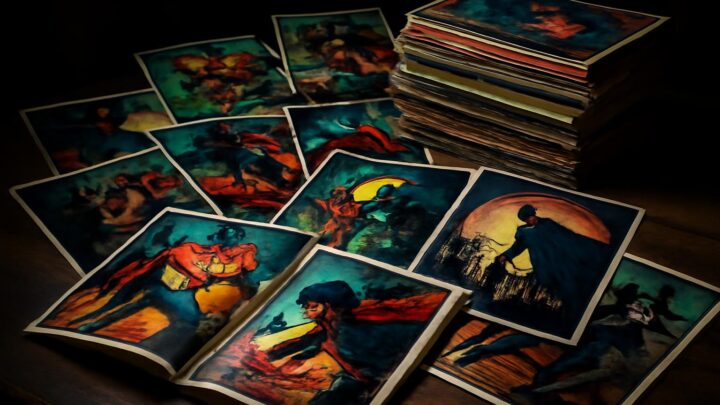
Best Comics for Artists: Craft, Art, and Visual Inspiration
Books that teach layout, linework, and color by example — study these to level up.
 By Web Admin

Every working comics artist has a shelf of books they return to not just to read, but to steal from — the way a painter copies the masters. These are the comics where the storytelling lives in the drawing itself: where a page layout does something you didn’t know a page could do, where a single panel teaches you more about spotting blacks than a semester of classes. If you draw, or want to, the fastest way to improve is to read the artists who are decades ahead of you, slowly, with a pencil in hand.
This guide is split two ways: the how-to books that teach craft directly, and the comics whose art is itself the master class. Prices are approximate US new-copy figures. Whether you are a total beginner or already inking pages, there is something here to push you forward.
How we chose these
We looked for books that reward study, not just a quick read. Each entry here does at least one thing at a world-class level — layout, linework, color, staging, or pacing — clearly enough that you can learn it by looking. Many are celebrated for their art in our wider best comic book artists roundup, and several come from the indie world we cover in best indie graphic novels. If you want the canon first, the best graphic novels of all time list overlaps heavily with the visually essential.
The essential craft books
Start with the theory. These four books teach the grammar of the medium directly.
- Understanding Comics (1993) — Scott McCloud’s foundational text on how panels, gutters, and time actually function. ~224 pages, ~US$22. Read it first, then re-read it every year.
- Making Comics (2006) — McCloud’s practical follow-up on facial expression, staging, and page composition. ~272 pages, ~US$25.
- Drawing Words and Writing Pictures (2008) — Jessica Abel and Matt Madden’s genuine textbook, complete with exercises. ~282 pages, ~US$30. The closest thing to a course in a book.
- Framed Ink (2010) — Marcos Mateu-Mestre’s masterclass on staging and composition, borrowed from film. ~128 pages, ~US$25. Every page is a lesson in where to put the camera.
Masters of the line
If your goal is inking and draftsmanship, study these until your hand aches.
- Blacksad (2000–ongoing) — Juanjo Guarnido’s watercolor animal-noir is arguably the most beautiful comic in print. ~US$20 per album. Study how he holds a scene with color temperature alone.
- Hellboy Library Editions (1994–ongoing) — Mike Mignola’s radical use of black shadow is a whole design philosophy. ~US$50 per oversized volume. The best teacher of negative space in the medium.
- Blame! (1997–2003) — Tsutomu Nihei’s architectural sci-fi manga, an engineering degree’s worth of perspective and scale. Master Edition, ~US$30 per volume.
Masters of color
Color is where many artists plateau. These books show what the discipline can do.
- Daytripper (2010) — Fabio Moon and Gabriel Ba’s luminous story of a life measured in possible endings, colored by Dave Stewart. ~256 pages, ~US$25. Our Daytripper review covers why it is a modern classic.
- On a Sunbeam (2018) — Tillie Walden’s space epic told in a restrained two-tone palette that proves you do not need every color to build a world. ~544 pages, ~US$22.
- Monstress (2015–ongoing) — Sana Takeda’s painted art-deco fantasy, a color-and-detail overload in the best way. Vol. 1 ~US$17.
Masters of layout and pacing
The invisible craft: how a page controls the reader’s eye and the story’s clock.
- Building Stories (2012) — Chris Ware’s box of fourteen printed objects, the most ambitious formal experiment comics has produced. ~US$50. A working education in information design.
- Asterios Polyp (2009) — David Mazzucchelli’s virtuoso use of style-as-meaning, where each character is drawn in a different visual language. ~344 pages, ~US$30.
- Here (2014) — Richard McGuire’s single-corner-of-a-room story that layers centuries onto one panel. ~304 pages, ~US$35.
Picks at a glance
| Book | Teaches | Level | Approx. price |
|---|---|---|---|
| Understanding Comics | Theory and grammar | All levels | ~US$22 |
| Framed Ink | Staging and composition | Intermediate | ~US$25 |
| Blacksad | Watercolor and acting | Advanced | ~US$20/vol |
| Hellboy Library | Spotting blacks | Intermediate | ~US$50/vol |
| Asterios Polyp | Style as meaning | Advanced | ~US$30 |
Print or digital for study?
Pros
- Print lets you see real ink weight, paper tone, and true color
- Oversized “Library” and “Artist” editions reproduce original line art at scale
- You can annotate, tab, and copy pages at the drawing table
Cons
- Premium art editions are expensive
- Digital is far cheaper for a first read before you commit
- Screen color rarely matches print, which matters for colorists
Our honest take: read digitally to decide what speaks to you, then buy the two or three books you will actually study in the largest print edition you can afford.
AmazonCheck price on AmazonA simple study routine
- Read a book once for pleasure, at normal speed.
- Read it again slowly, asking of each page: why is the camera here, why this panel size?
- Copy two or three pages by hand to feel the decisions the artist made.
- Steal one specific technique and force it into your next page of work.
Buying tips for your reference shelf
- Buy the theory books new and keep them forever. Understanding Comics and Framed Ink are cheap references you will open for years, so they earn a permanent spot on the desk.
- Sample the art books digitally, then upgrade the keepers. Read a title once on a tablet to decide whether it speaks to you, and only then invest in an oversized print edition worth studying.
- Chase “Artist” and “Library” editions for line study. These reproduce pencils and inks at or near original size, which is invaluable if you want to see exactly how a pro weights a line.
- Do not overlook manga. Titles like Blame! and Vagabond teach perspective, brushwork, and speed lines better than most Western books, and they are cheap per volume.
A reference shelf is not meant to be pretty; it is meant to be worked. Dog-ear it, tab it, and keep it within arm’s reach of wherever you draw.
Where to go next
For more on the creators behind these pages, see our best comic book artists feature. Much of the most adventurous art comes from small publishers, so browse best Image Comics and best indie graphic novels for your next study pieces.
Frequently asked questions
What is the best comic for a beginner artist to study?
Start with Understanding Comics by Scott McCloud. It teaches the underlying grammar of the medium so clearly that everything you read afterward becomes a lesson. Pair it with Framed Ink once you are ready to think about staging.
Which comics are best for learning color?
Daytripper, Blacksad, and Monstress are the three we point colorists to most often. For a lesson in restraint, On a Sunbeam proves how much you can do with a two-tone palette.
Do I need expensive art editions to learn from these?
No. A standard trade paperback teaches almost everything. Oversized “Library” or “Artist” editions are a treat for the books you decide to study seriously, because they reproduce the line art at or near its original size.
How should I actually study a comic to improve?
Read it once for enjoyment, then again slowly asking why each panel is framed the way it is. Copy a few pages by hand, and deliberately steal one technique for your next piece. Analysis plus imitation beats passive reading every time.